
Table of Contents
- Why Portland’s Rain and Environmental Regulations Demand Specialized Expertise
- Oregon CCB Licensing: Your Most Important Protection Against Bad Contractors
- How to Read an Asphalt Bid (and Spot Hidden Fees Before They Cost You)
- What Your Warranty Actually Covers (and What It Doesn’t)
- The Technical Details That Separate Quality Contractors From the Rest
- Final Thoughts
Not all asphalt contractors are created equal—especially in the Portland area, where our unique climate and strict environmental regulations demand specialized expertise. Whether you’re planning a new driveway, parking lot, or commercial paving project, choosing the wrong contractor can lead to costly failures, hidden fees, and pavement that won’t last through our rainy winters. In Portland, where we receive 36 to 43 inches of rain annually, proper drainage, grading, and subbase preparation aren’t optional—they’re essential. Yet many property owners fall victim to predatory pricing tactics, vague contracts, and unlicensed operators who disappear after the job is done. This guide breaks down exactly what you need to know before signing any paving contract. We’ll cover everything from verifying Oregon Construction Contractors Board (CCB) licensing to understanding workmanship warranties, spotting common scams like the “leftover asphalt” scheme, and ensuring your contractor follows Portland’s stormwater management regulations. By the end of this article, you’ll know how to demand transparent, itemized bids, ask the right technical questions, and identify contractors who prioritize quality and long-term performance over quick profits.
Why Portland’s Rain and Environmental Regulations Demand Specialized Expertise
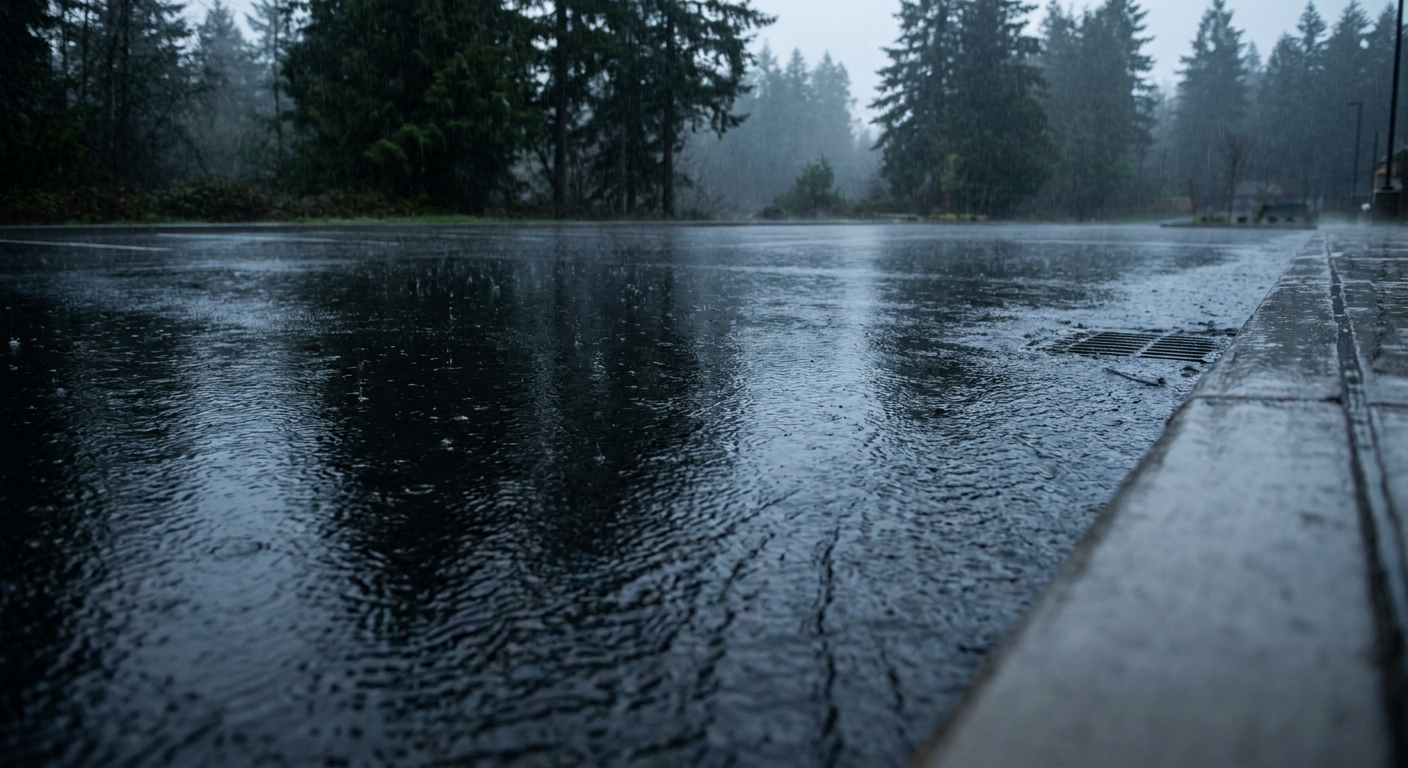
The Pacific Northwest’s wet climate and strict environmental codes create unique challenges that require contractors with specific knowledge and experience. Understanding these regional demands is critical to ensuring your pavement investment lasts decades rather than just a few winters.
Portland’s Hydrological Challenges
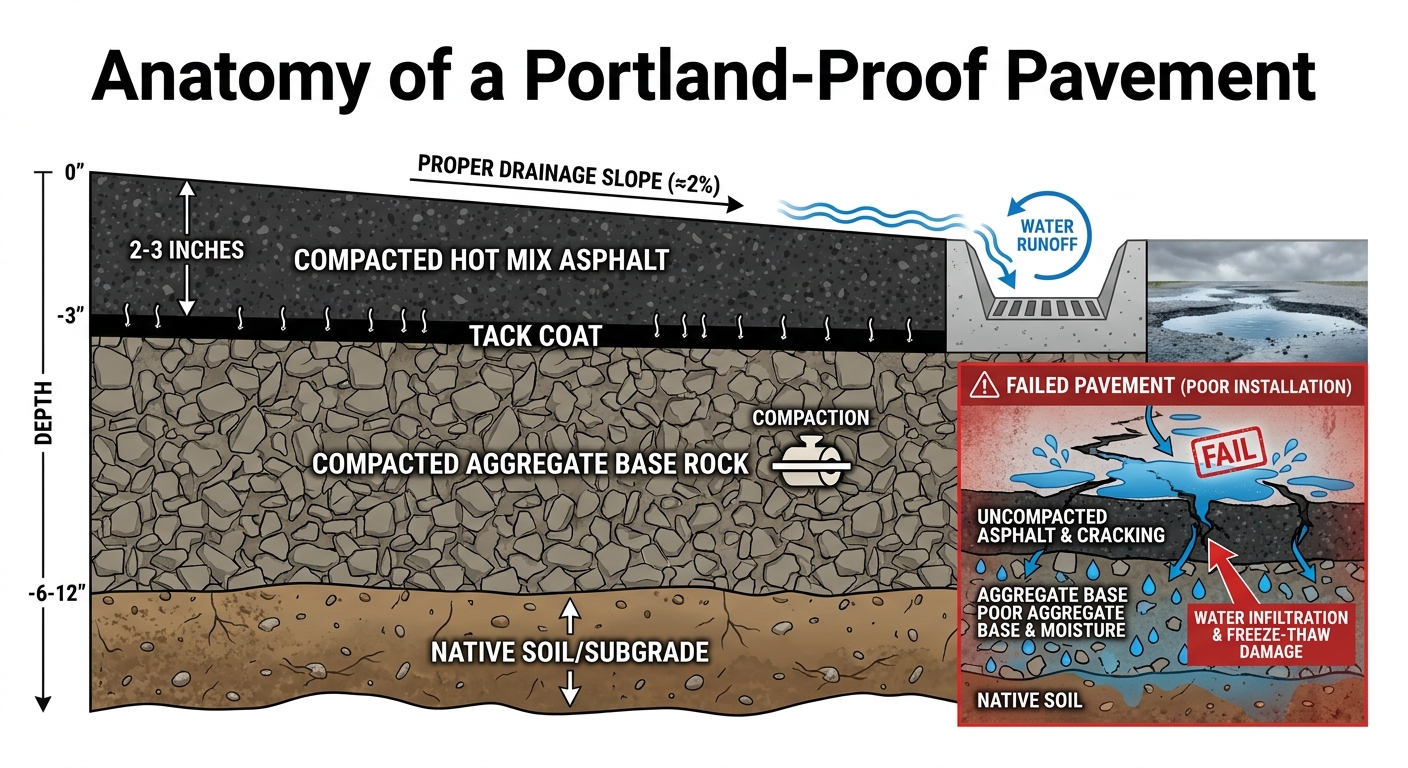
Portland’s climate presents constant moisture exposure that puts immense stress on improperly installed asphalt. With annual rainfall ranging from 36 to 43 inches, water management becomes the cornerstone of successful paving projects. When contractors fail to account for this reality, the consequences are swift and expensive. Improper drainage leads to standing water that infiltrates the subgrade layers beneath the asphalt surface. Once water penetrates these foundational layers, the pavement structure becomes compromised. Even Portland’s relatively mild freeze-thaw cycles—less frequent than other regions but still present during winter months—cause trapped water to expand, creating internal pressure that manifests as cracking, alligatoring, and eventually potholes. The most devastating failures occur when contractors underestimate Portland’s clay-heavy soils. These soils retain moisture and become unstable when saturated, causing the pavement to shift and crack prematurely. A contractor unfamiliar with these soil conditions will produce failing pavement regardless of how perfectly they lay the asphalt surface.
Stormwater Management Requirements
Beyond climate challenges, Portland’s regulatory environment adds another layer of complexity. The Oregon Department of Environmental Quality (DEQ) and the City of Portland Bureau of Environmental Services mandate strict stormwater controls that directly impact how asphalt installations must be designed and executed. Contractors must understand permeable asphalt solutions and proper runoff diversion techniques to meet these requirements. Non-compliance isn’t just an administrative headache—it can result in substantial fines and forced remediation that becomes the property owner’s financial burden if the contractor used isn’t properly licensed and insured. These regulations exist for good reason: Portland’s stormwater systems must manage enormous volumes of runoff, and improperly designed pavement contributes to flooding and water quality issues throughout the region.
Why Generic Paving Knowledge Isn’t Enough
National paving standards provide a baseline, but they must be adapted for regional conditions. A contractor who has successfully installed driveways in Arizona or Texas will struggle in Portland without understanding how constant moisture exposure changes every calculation. Base preparation becomes exponentially more critical in wet climates. The aggregate base must provide adequate drainage while maintaining structural integrity under load. The grading must ensure water runs off the surface efficiently, not into the pavement structure. Even the timing of installation matters—paving during extended rainy periods can compromise compaction quality and introduce moisture into layers that should remain dry. Contractors who treat Portland like any other market inevitably produce pavement that fails prematurely, leaving property owners facing expensive repairs and replacement far sooner than expected.
Oregon CCB Licensing: Your Most Important Protection Against Bad Contractors
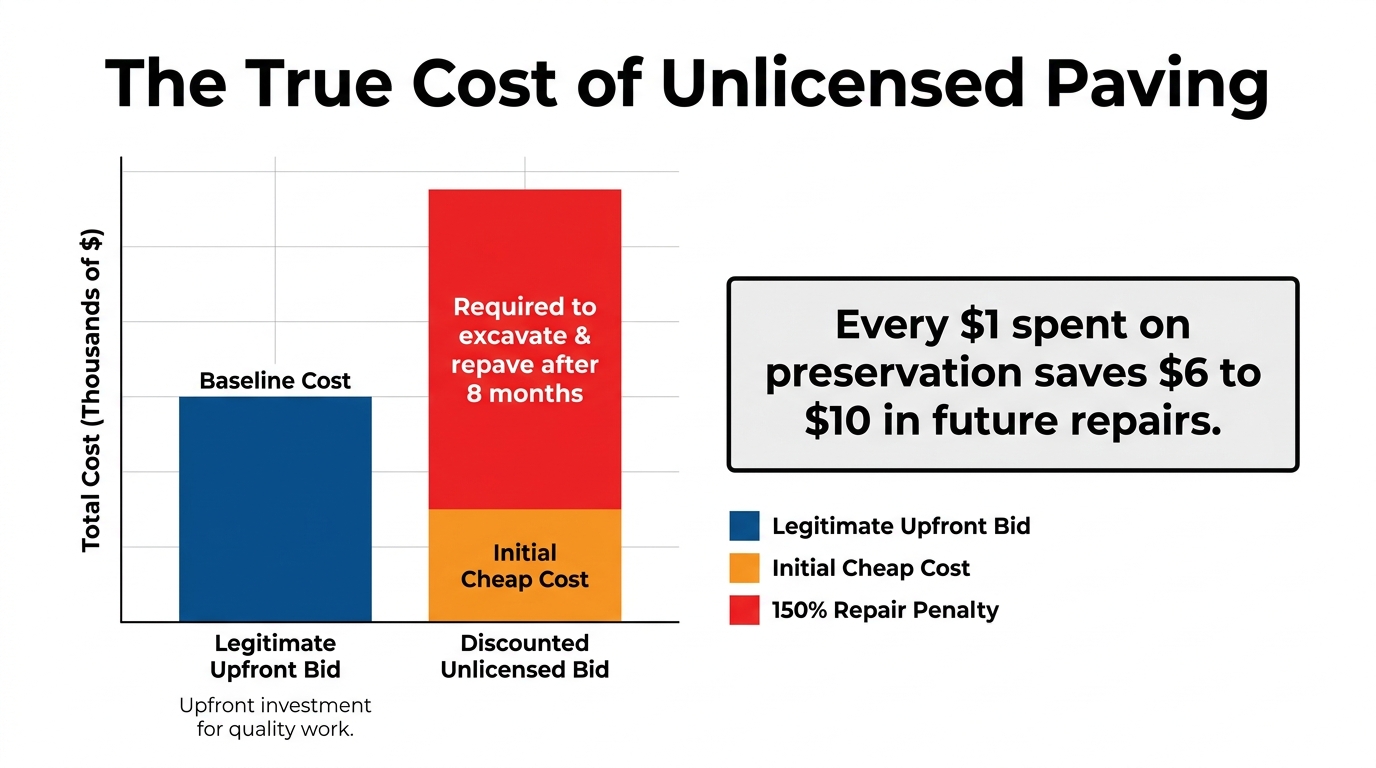
Understanding Oregon’s contractor licensing requirements protects you from fraudulent operators and ensures you have legal recourse if something goes wrong. This single verification step can save you tens of thousands of dollars and countless hours of frustration.
What Oregon CCB Licensing Means
In Oregon, all contractors performing work for compensation must be licensed with the Construction Contractors Board. This isn’t merely a bureaucratic formality—it’s a critical consumer protection mechanism that separates legitimate businesses from fly-by-night operators. CCB licensing ensures the contractor carries minimum liability insurance and maintains a surety bond. These financial protections exist specifically to safeguard consumers against breach of contract and substandard workmanship. When a licensed contractor fails to meet their obligations or produces defective work, the CCB provides avenues for dispute resolution and potential financial recovery through the bond. The licensing process itself requires contractors to demonstrate knowledge of state construction standards, safety regulations, and business practices. While licensing doesn’t guarantee perfection, it establishes a baseline of competency and accountability that unlicensed operators simply don’t have.
How to Verify Credentials
Before any work begins—even before receiving a bid—ask for the contractor’s CCB number. Legitimate contractors will provide this information immediately without hesitation. In fact, quality contractors often include their CCB number prominently on their website, business cards, and marketing materials because they know it signals credibility. Once you have the CCB number, verify its active status on the Oregon.gov CCB database. This online verification takes less than five minutes and provides critical information:
- Current license status (active, suspended, expired)
- Bond coverage amounts
- Insurance coverage confirmation
- Any complaints filed against the contractor
- License history and any disciplinary actions
Also confirm that insurance certificates are current and adequate for your project size. General liability insurance should cover property damage and bodily injury, while workers’ compensation protects you from liability if a worker is injured on your property.
What Happens If You Hire Unlicensed Contractors
The consequences of hiring unlicensed contractors extend far beyond simply receiving poor-quality work. When you hire an unlicensed operator, you forfeit virtually all legal protections and remedies available to consumers. If work fails or the contractor abandons your project mid-completion, you have zero legal recourse through the CCB. The bond that would normally provide financial recovery doesn’t exist. You can’t file a complaint with the state agency designed to protect consumers from contractor fraud. Your homeowner’s insurance likely won’t cover damages caused by unlicensed contractors either. Insurance policies typically exclude coverage for work performed by unlicensed operators, meaning you bear 100% of the financial burden when things go wrong.
Red Flags That Indicate Unlicensed Operations
Certain behaviors and business practices strongly suggest you’re dealing with an unlicensed or disreputable contractor:
- Unable to provide CCB number immediately. Legitimate contractors have this information readily available and expect to be asked for it.
- Demands cash payment or offers “discount for cash.” This typically indicates the contractor is attempting to avoid taxation and regulatory oversight. It also eliminates any paper trail that could help you recover funds if work fails.
- Uses high-pressure sales tactics. Phrases like “deal expires today” or “I can only offer this price if you decide right now” are hallmarks of predatory operations. Quality contractors understand that major financial decisions require time and consideration.
- Claims to have “leftover materials” from another job. This is one of the most common paving scams, where transient crews offer heavily discounted rates using allegedly surplus asphalt. These operations typically deliver subpar, improperly compacted pavement and disappear immediately after receiving payment.
When you encounter these red flags, walk away. The short-term savings never justify the long-term costs and headaches of dealing with disreputable contractors.
How to Read an Asphalt Bid (and Spot Hidden Fees Before They Cost You)
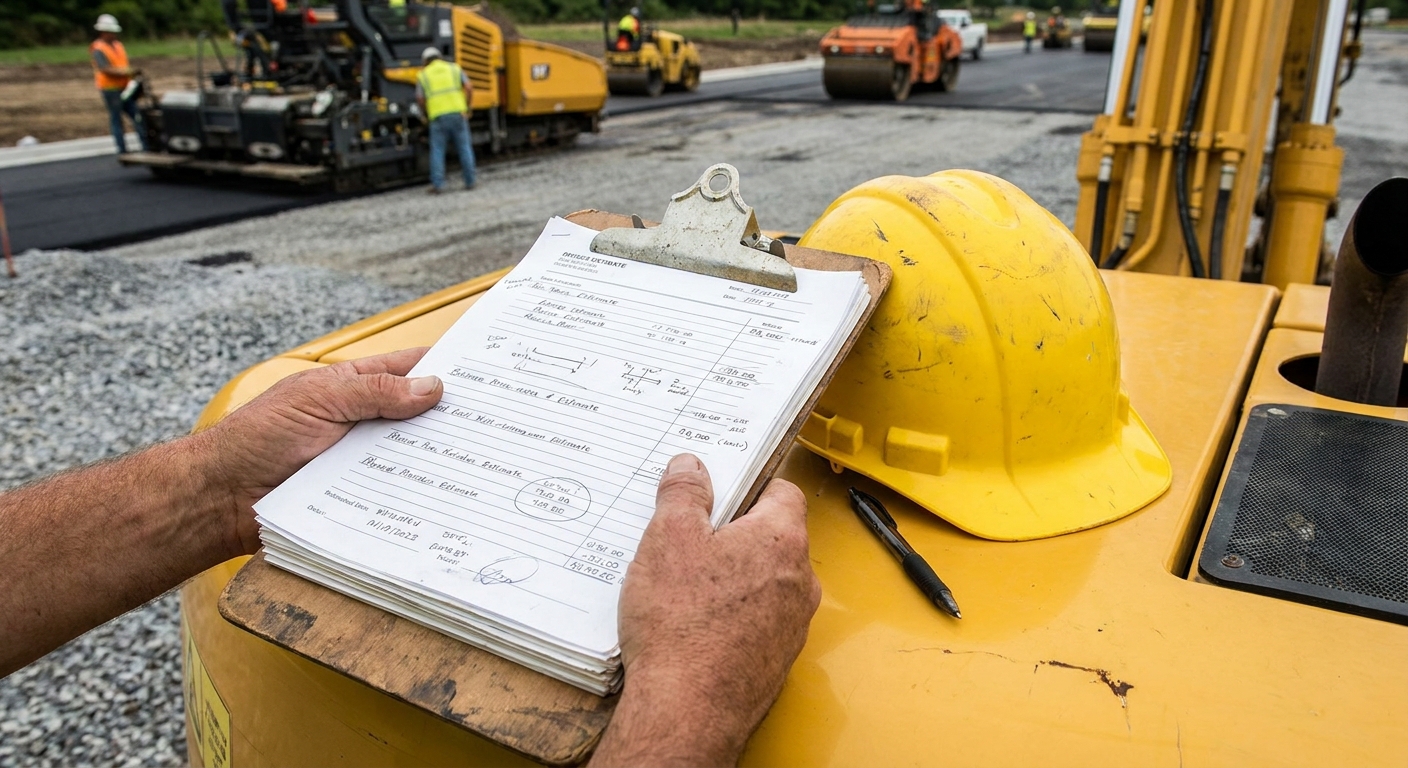
Transparent contractors provide detailed, itemized bids that specify exactly what you’re paying for—vague contracts are the number one indicator of problems ahead. Learning to decode a legitimate bid versus a predatory one protects your investment and sets clear expectations for project completion.
What a Legitimate Bid Should Include
A professional asphalt bid should read like a detailed blueprint of your project, not a vague estimate scribbled on a business card. Every material quantity, specification, and process should be clearly documented. Start with exact square footage of the paving area. This measurement should be verified during an on-site visit, not estimated from satellite images or your description over the phone. Precise measurements prevent disputes over material costs and ensure you’re paying for actual work performed. The bid must specify the depth of base rock excavation and the type of aggregate to be used. Standard specifications might call for 4-6 inches of compacted crushed aggregate base, but the exact depth depends on your soil conditions and intended use. Commercial properties with heavy vehicle traffic require deeper base preparation than residential driveways. Thickness of the compacted asphalt layer matters immensely. Residential applications typically require 2-3 inches of compacted asphalt, while commercial properties need 3-4 inches or more. The bid should specify “compacted” thickness, not loose thickness—asphalt compresses during rolling, so 3 inches of loose mix might only provide 2.5 inches of compacted pavement. The specific Hot Mix Asphalt (HMA) type and grade should be documented. Different mix designs exist for different applications. A ½-inch aggregate commercial mix provides different performance characteristics than a standard residential mix. Your contractor should explain why they’re recommending a particular mix for your project. Grading and drainage specifications deserve special attention in Portland’s climate. The bid should detail how the contractor will ensure positive drainage—typically a minimum 2% slope away from structures. In areas requiring compliance with stormwater management regulations, the bid should specify permeable asphalt systems or drainage structures. Finally, the equipment to be used should be listed. Vibratory rollers, paver machines, and compaction equipment types indicate the contractor’s capability to deliver quality work. Hand tools and minimal equipment suggest a crew unable to achieve proper density and uniformity.
Common Hidden Fees and How to Avoid Them
Even detailed bids can conceal costs if you don’t know what to look for. Certain “unforeseen” charges appear so regularly they should be considered deliberate omissions rather than legitimate surprises. Subgrade excavation often appears as an unexpected cost. During the initial site visit, a competent contractor should assess soil conditions and identify if additional excavation beyond standard depth will be necessary. If existing base is contaminated, unstable, or improperly compacted, this should be addressed in the initial bid—not discovered conveniently after work begins. Equipment mobilization charges deserve scrutiny. Some contractors quote artificially low installation prices but add substantial fees for bringing equipment to the site. A legitimate bid includes mobilization costs in the total price or clearly separates them as a line item. Debris removal and disposal fees should be specified upfront. If your existing driveway requires removal, the contractor should estimate disposal costs based on volume and local dump fees. Legitimate contractors build these costs into the bid rather than presenting them as surprises. Grade changes or additional materials become necessary when initial site assessment was inadequate. Thorough contractors identify these needs during their site visit and adjust their bid accordingly. Contractors who skip detailed site assessment often use “necessary grade adjustments” as justification for inflating costs after you’ve committed to the project.
The “Leftover Asphalt” Scam
The Better Business Bureau regularly warns consumers about this pervasive scam. Transient crews approach property owners claiming to have leftover materials from a nearby job. They offer to pave your driveway at a heavily discounted rate using this “surplus” asphalt that would otherwise go to waste. This story is almost always fabricated. These operations typically use cold, improperly mixed asphalt that hasn’t been produced to specifications. Instead of proper paving equipment, crews spread material by hand and use inadequate compaction methods—often just hand tampers or plate compactors rather than heavy vibratory rollers.
These operations prey on homeowners looking to save money, but the “savings” become exponentially more expensive when the pavement fails and requires complete replacement.
Price vs. Value: Understanding Long-Term Investment
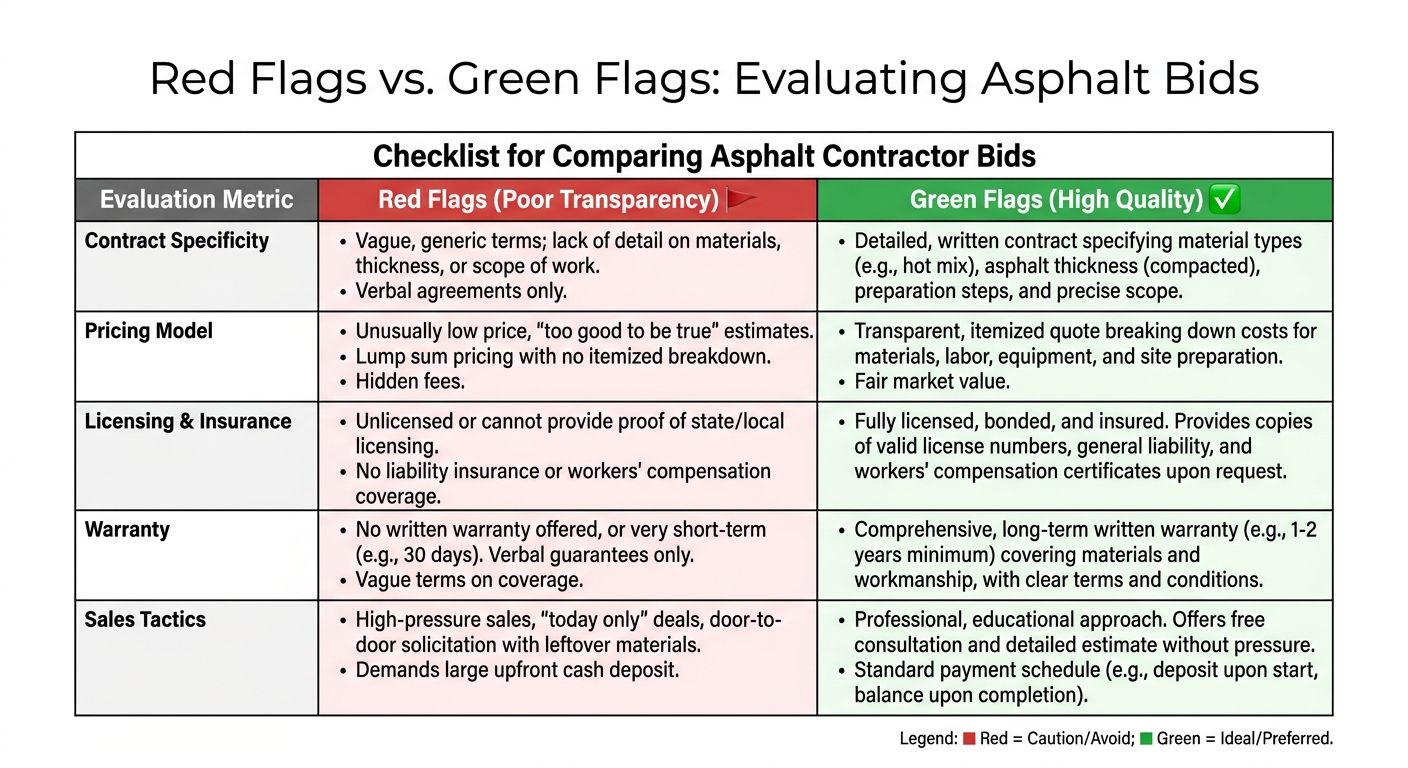
The lowest bid is rarely the best value. Quality materials and proper installation techniques prevent costly premature failure, and the financial impact of this difference is substantial.
Quality contractors invest in proper equipment, experienced crews, and premium materials. These investments increase their costs, which reflects in their bids. But they also produce pavement that withstands Portland’s climate challenges and provides decades of reliable service. When comparing bids, focus on specifications and methodology rather than just bottom-line price. The contractor who thoroughly explains their process, provides detailed material specifications, and demonstrates knowledge of Portland-specific challenges is typically delivering far better value than the competitor offering an inexplicably low price.
What Your Warranty Actually Covers (and What It Doesn’t)
A warranty is only valuable if you understand its terms and the contractor has the longevity to honor it. Many property owners discover too late that their “guaranteed” work isn’t actually covered when problems arise.
Types of Warranties
Understanding the distinction between material and workmanship warranties is essential for evaluating what protection you actually receive. Material warranties are provided by the asphalt plant or manufacturer, not your contractor. These warranties typically extend 20+ years and cover defects in the asphalt mix itself—manufacturing problems like improper bitumen content or aggregate gradation. However, material warranties rarely cover issues caused by installation problems, environmental factors, or normal wear. Workmanship warranties are provided by the contractor and typically span one to two years per industry standards. These warranties cover structural failures resulting from poor installation practices—issues like improper grading causing water pooling, seam failures between paving sections, and premature deterioration from inadequate compaction. Both types of warranties matter, but workmanship warranties provide more practical protection for most pavement failures. Installation quality affects performance far more than material quality when working with reputable asphalt plants.
What Standard Workmanship Warranties Cover
A comprehensive workmanship warranty should address the most common installation-related failures that occur when contractors cut corners or lack expertise:
- Structural failures due to poor installation – This includes pavement collapse or significant deterioration resulting from inadequate base preparation, improper compaction, or incorrect material application.
- Improper grading causing water pooling – When water stands on the pavement surface rather than draining away, it indicates grading mistakes during installation.
- Seam failures and premature unraveling – These failures appear as separation between paving strips or crumbling edges and indicate poor workmanship rather than normal wear.
- Compaction issues leading to premature deterioration – Widespread cracking, rutting, or surface degradation occurring far sooner than expected due to inadequate density.
Common Exclusions (That Are Legitimate)
Not every pavement problem represents a warranty claim. Legitimate exclusions protect contractors from responsibility for issues outside their control:
- Damage from vehicles exceeding designed load limits – If you pave a residential driveway designed for passenger vehicles, then park a loaded dump truck on it repeatedly, resulting damage isn’t the contractor’s fault.
- Chemical spills that degrade asphalt – Asphalt is petroleum-based and breaks down when exposed to gasoline, oil, or other hydrocarbon solvents.
- Normal wear from weather and traffic over time – All pavement gradually deteriorates through oxidation, UV exposure, and use. Warranties cover premature failure, not the natural aging process.
- Damage from tree roots or ground settling unrelated to installation – External forces that affect the pavement structure after installation aren’t installation defects.
Warning Signs of Worthless Warranties
Certain warranty characteristics indicate you’re receiving marketing hype rather than genuine protection:
- Verbal promises without written documentation – If the contractor verbally guarantees their work but won’t document terms in writing, you have no enforceable protection.
- Extremely long warranty periods from new or unknown companies – If a contractor who’s been in business for two years offers a ten-year warranty, who will honor that warranty when the company no longer exists?
- Warranties with vague language and no specific exclusions listed – Professional warranties use clear, specific language describing exactly what is and isn’t covered.
- Pro-rated warranties that decrease coverage over time – Some warranties offer 100% coverage year one, 75% year two, 50% year three, etc. By year five, you’re responsible for 75% of repair costs anyway, substantially reducing the warranty’s practical value.
The Technical Details That Separate Quality Contractors From the Rest
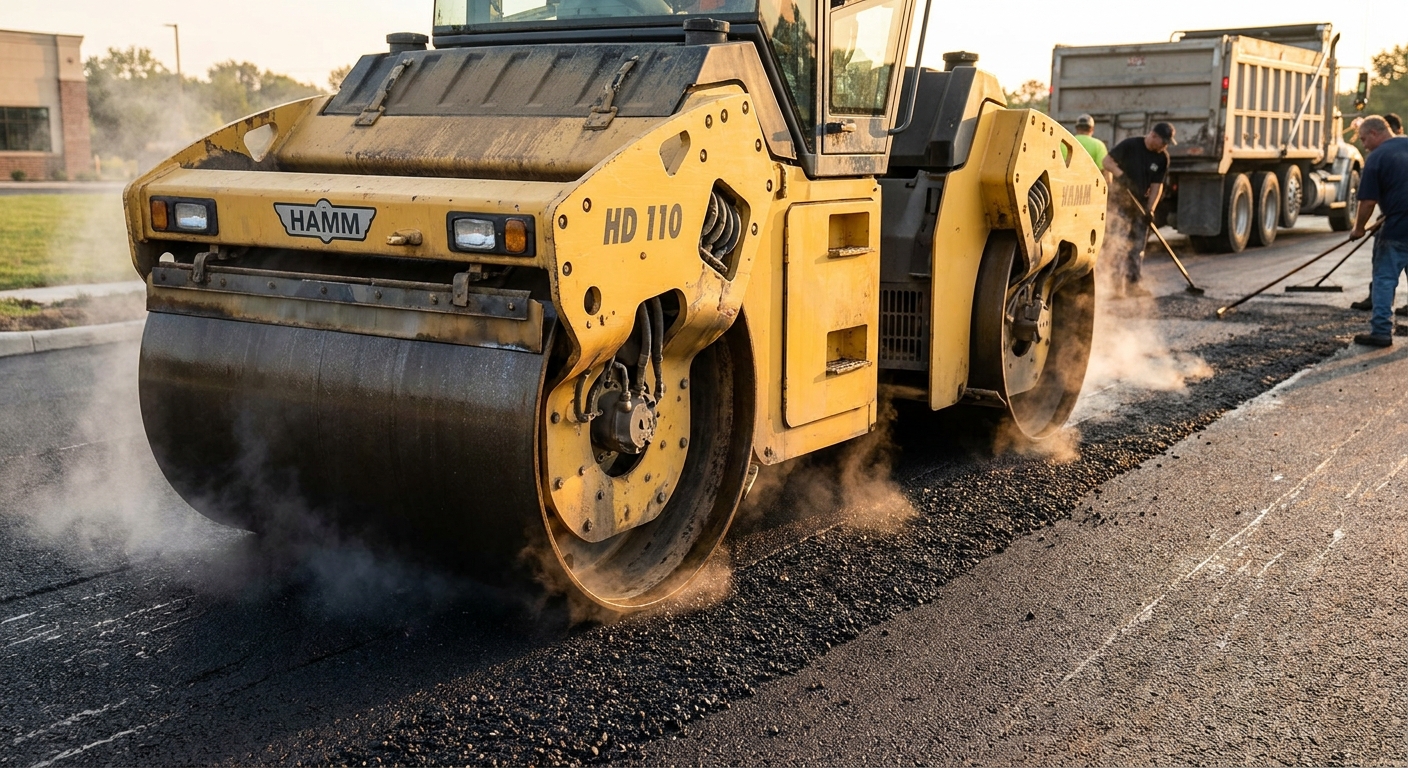
Proper equipment and installation techniques are the difference between pavement that lasts 20+ years and pavement that fails in under two years. Understanding these technical factors helps you evaluate whether a contractor has the capability to deliver lasting quality.
Why Compaction Is Everything
The Asphalt Institute mandates specific density requirements because compaction directly determines pavement durability and lifespan. Inadequately compacted asphalt contains excessive air voids that allow water infiltration and accelerate oxidation. Under-compacted asphalt permits moisture to penetrate the pavement structure, where it causes multiple forms of deterioration. Water infiltration leads to stripping—the separation of asphalt binder from aggregate particles—which causes the pavement to unravel and crumble. In cold weather, water trapped in air voids freezes and expands, creating internal pressure that manifests as cracking. The oxidation process accelerates dramatically in under-compacted pavement. Air voids allow oxygen to penetrate deep into the asphalt structure, where it hardens the binder and makes the pavement brittle. Brittle pavement cracks under stress and temperature changes, leading to rapid deterioration. Proper compaction is achieved only with appropriate vibratory rollers—not hand tampers or plate compactors. Vibratory rollers use weight and vibration frequency to achieve density levels that hand-operated equipment simply cannot match. A contractor using plate compactors for anything larger than small patch work is incapable of achieving proper density. The equipment weight and vibration frequency must be matched to the project specifications. Residential driveways might use lighter rollers (3-5 tons), while commercial applications require heavier equipment (8-12 tons or more). Using undersized equipment produces inadequate density regardless of how many passes the operator makes.
Equipment That Indicates a Professional Operation
The equipment a contractor brings to your job site immediately signals their capability to deliver quality work. Professional operations invest in specialized paving equipment because it’s essential for meeting specifications:
- Paving machines ensure uniform mat thickness and proper slope. These machines spread asphalt at controlled thickness while creating the initial compaction and surface texture.
- Heavy vibratory rollers appropriate to project size demonstrate the contractor can achieve specified density. A fleet that includes multiple roller sizes indicates the contractor adapts equipment selection to project requirements.
- Proper trucks and hauling equipment for maintaining asphalt temperature during transport prevent installation problems before crews even begin paving.
- Spray equipment for tack coat application between layers ensures proper bonding when installing multiple lifts.
Base Preparation—The Foundation of Long-Lasting Pavement
Even perfectly installed asphalt fails prematurely when placed over inadequate base. The foundation supporting the asphalt surface determines the pavement system’s structural capacity and drainage performance. Excavation depth and aggregate type must be engineered for site-specific conditions. Portland’s clay-heavy soils require deeper excavation and more robust base preparation than sandy or well-draining soils. The aggregate material itself must provide stability, load distribution, and drainage—typically crushed rock meeting specific gradation requirements. Proper grading ensures water runs off rather than infiltrating the pavement structure. This requires precision during base preparation, not just surface grading. The base must slope appropriately to direct water away from structures and toward drainage systems.
This case demonstrates why Portland-specific expertise matters. A contractor from a drier climate might have simply replaced the asphalt without addressing underlying drainage issues, resulting in repeated failures and mounting costs.
Modern Innovations Worth Asking About
Forward-thinking contractors adopt technologies and techniques that improve quality, sustainability, and project efficiency. Asking about these innovations helps identify contractors who prioritize continuous improvement:
- Warm Mix Asphalt (WMA) technology allows lower-temperature production and installation, reducing emissions while enabling cold-weather paving. Traditional Hot Mix Asphalt requires temperatures around 300°F for proper workability. WMA technologies reduce required temperatures to 200-250°F, decreasing fuel consumption and greenhouse gas emissions while extending the paving season.
- Permeable asphalt solutions for stormwater management address Portland’s regulatory environment while providing functional benefits. These systems allow water to drain through the pavement rather than running off, reducing flooding risks and improving water quality.
- Drone-assisted site measurement for accurate bidding represents how technology improves contractor precision and customer value. Drones capture detailed topographical data more quickly and accurately than traditional surveying methods, resulting in bids based on precise measurements rather than estimates.
Final Thoughts
Hiring the right asphalt contractor in the Portland area isn’t just about getting the lowest price—it’s about protecting your investment and ensuring your pavement can withstand our unique climate challenges for decades to come. The contractors who provide transparent, itemized bids, carry active Oregon CCB licenses, use proper equipment, and offer clear written warranties are the ones who will deliver lasting value. Those who pressure you for immediate decisions, can’t provide documentation, or offer deals that seem too good to be true are the ones who will cost you far more in the long run. Before you sign any contract, verify CCB licensing, demand detailed specifications in writing, and ask about base preparation and compaction methods. A quality contractor will welcome these questions—it’s a red flag if they don’t. At Smooth Rollin, we believe Portland property owners deserve contractors who educate, not just sell. Understanding what separates quality workmanship from quick shortcuts empowers you to make informed decisions and demand the transparency that leads to pavement that truly lasts.
Ready to Discuss Your Paving Project?
Get a detailed, honest assessment and itemized bid from a contractor who puts transparency and quality first—no pressure, no hidden fees, just straight answers.
References:
- National Weather Service. (2024). Portland, OR Climate Data and Annual Precipitation. National Oceanic and Atmospheric Administration (NOAA). https://www.weather.gov/pqr/pdxclimate
- City of Portland, Bureau of Environmental Services. (2020). Stormwater Management Manual. https://www.portland.gov/bes/stormwater/stormwater-management-manual
- Oregon Construction Contractors Board (CCB). (2024). Consumer Guide: Hiring a Licensed Contractor. Oregon.gov. https://www.oregon.gov/ccb/Pages/consumer-guide.aspx
- Better Business Bureau (BBB). (2023). BBB Scam Alert: Need a new driveway? Watch out for paving scams. https://www.bbb.org/article/news-releases/16709-bbb-scam-alert-need-a-new-driveway-watch-out-for-paving-scams
- National Asphalt Pavement Association (NAPA). (2022). Quality Assurance and Warranties in Asphalt Paving. https://www.asphaltpavement.org/expertise/engineering/quality-assurance
- Asphalt Institute. (2021). The Importance of Compaction in Hot Mix Asphalt. https://www.asphaltinstitute.org/engineering/compaction/
- Associated General Contractors of America (AGC). (2023). Construction Technology Report: Drones and Digital Bidding. https://www.agc.org/industry-priorities/technology
- Environmental Protection Agency (EPA). (2022). Warm Mix Asphalt Technologies and Environmental Benefits. https://www.epa.gov/greenerproducts/warm-mix-asphalt
- Federal Highway Administration (FHWA). (2021). Pavement Preservation: Why It Matters. U.S. Department of Transportation. https://www.fhwa.dot.gov/preservation/
- National Asphalt Pavement Association (NAPA). (2020). Porous Asphalt Pavements for Stormwater Management. https://www.asphaltpavement.org/expertise/sustainability/porous
- Pavement Preservation Journal. (2022). The Financial Impact of Subgrade Failures in Residential Paving. Foundation for Pavement Preservation (FP2). https://fp2.org/pavement-preservation-journal/