Portland's Paving Contractor for Driveways and Lots
Smooth Rollin’ Sealcoating and Paving installs new asphalt across the Portland metro from our shop in Gresham. New paving is what we are set up for, and it is the work Cisco bought the paver to do. A driveway or lot we install is ours from the first cut of excavation to the last pass of the roller, run by one crew rather than handed between a grading subcontractor and a paving subcontractor who never speak to each other.
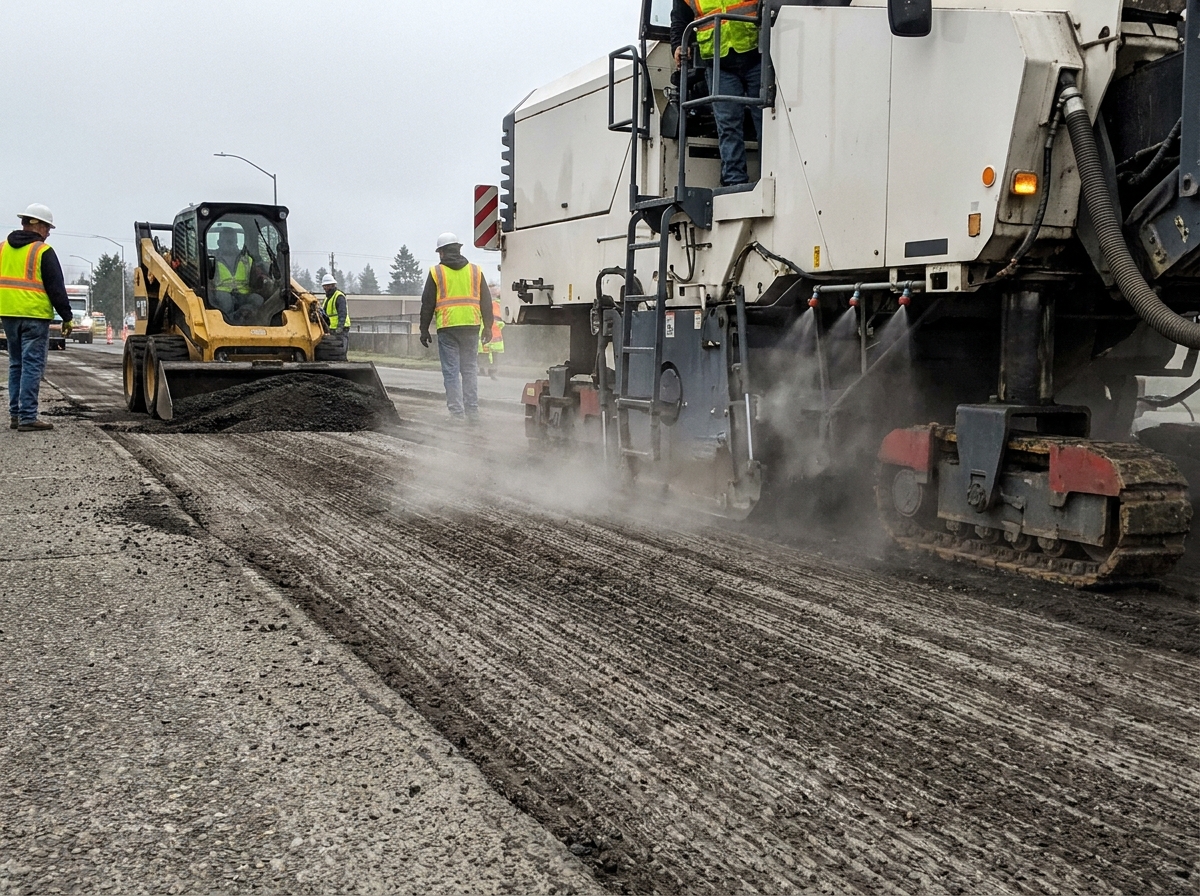
Most of what decides how long asphalt lasts happens before any asphalt arrives. Excavation depth, subgrade condition, base material and compaction, and the grade that decides where water goes. Get those right and a Portland driveway runs 15 to 20 years. Get them wrong and no thickness of surface saves it. If your surface is still structurally sound and only needs patching or crack work, that is a repair job rather than a paving job, and we would rather point you at our asphalt repair services than sell you a rebuild you do not need.
1 Year
Warranty on All Work
Benefits
What a Properly Built Asphalt Surface Gives You
New paving is a structural job. These are the things a correctly built surface does that a resurfaced one cannot.
A Base That Carries the Load
A new installation lets us build the foundation for what will actually drive on the surface. Residential driveways, customer parking and loaded truck traffic each need a different base depth and material, and that decision can only be made once, at construction.
Drainage Designed In, Not Added Later
Water is what ends asphalt, and it ends it from underneath. A new build lets us set the grade so runoff leaves the surface properly rather than pooling or running under the edges. Retrofitting drainage onto an existing surface is always a compromise.
15 to 20 Years, Not 5
A properly built asphalt surface in our climate runs 15 to 20 years with routine maintenance. Surfaces laid over failed bases or inadequate preparation fail in a fraction of that, which makes the cheaper quote considerably more expensive per year.
Curb Appeal and Property Value
A smooth, correctly graded surface is the first thing anyone sees arriving at a property. For a business it sets the impression before a customer reaches the door. For a home it is one of the few improvements visible from the street.
Our Promise
Quality You Can Count On
Every project receives the same attention to detail, from small driveway repairs to large commercial parking lots. We treat your property like our own.
Our Services
Complete Asphalt Paving Services in Portland
Everything below is new installation or full rebuild work. For patching, potholes and crack sealing on a sound surface, see our asphalt repair page.
New Asphalt Driveways
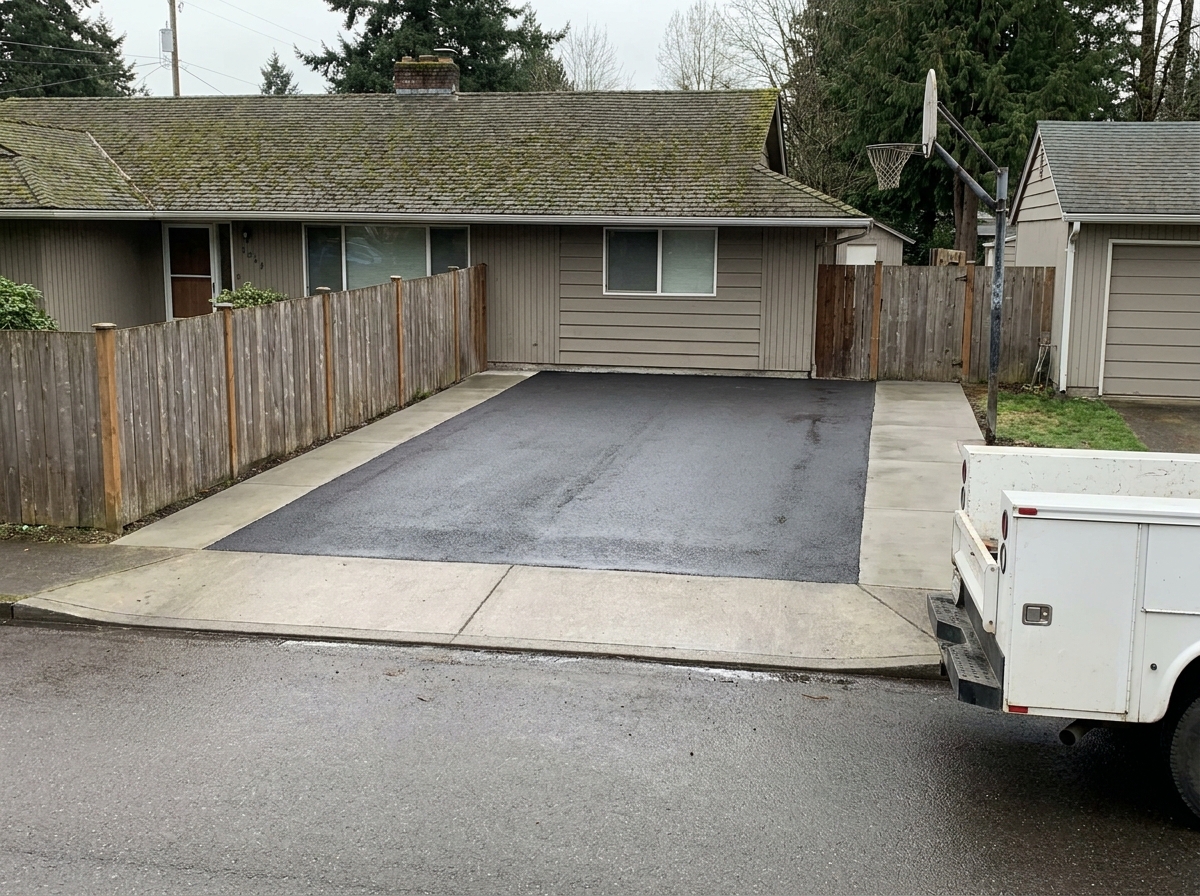
Complete residential driveway installation from excavation to final roll. We remove the existing surface or vegetation, excavate to depth, install and compact an aggregate base, set the grade for drainage, and lay and compact the asphalt at temperature. We handle straightforward suburban driveways, long rural approaches, sloped and awkward-access sites, and shared driveways between properties.
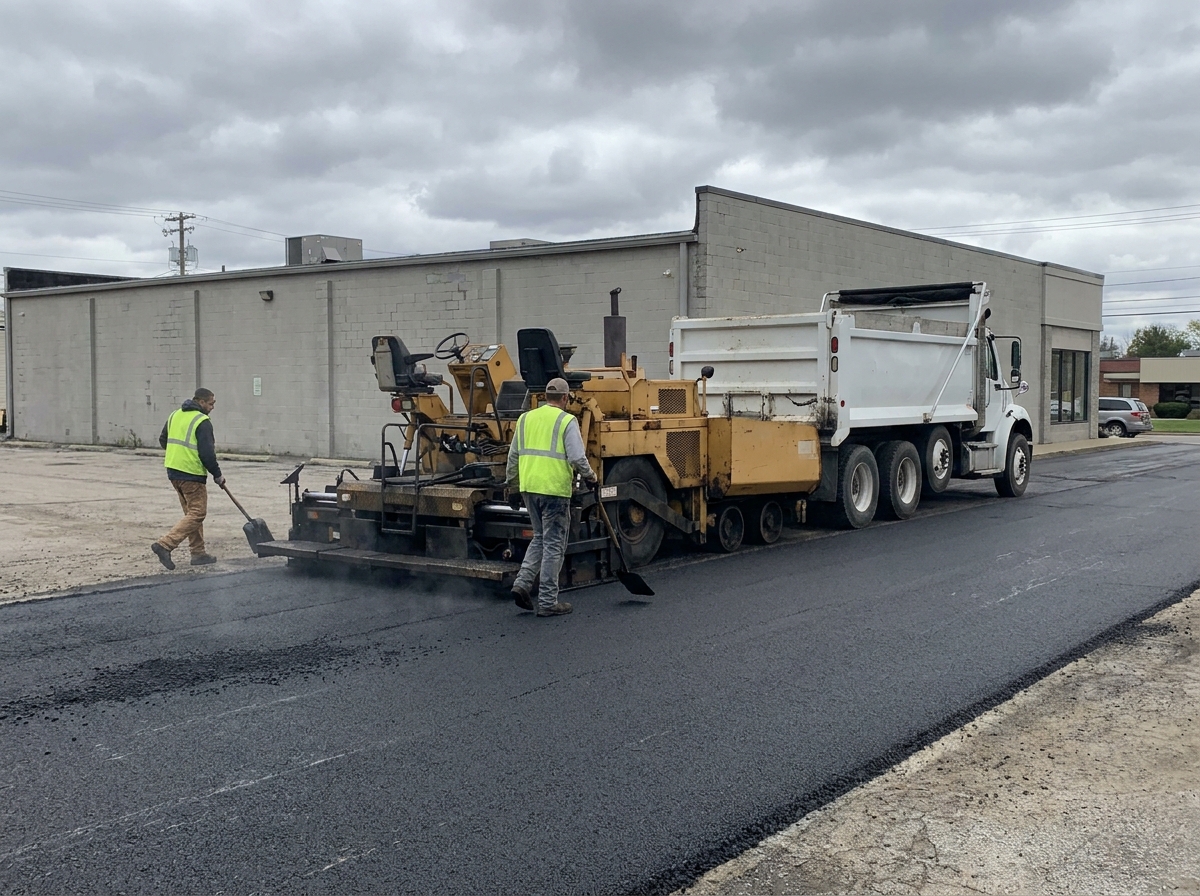
New parking lot construction and full-depth rebuilds for Portland-area businesses. Customer parking, employee lots, delivery and service areas, and truck courts each get specified for the load they carry rather than one section across the whole site. We phase the work so you keep access and parking open, and handle the striping and ADA layout in the same visit. See our commercial paving services for the full scope.
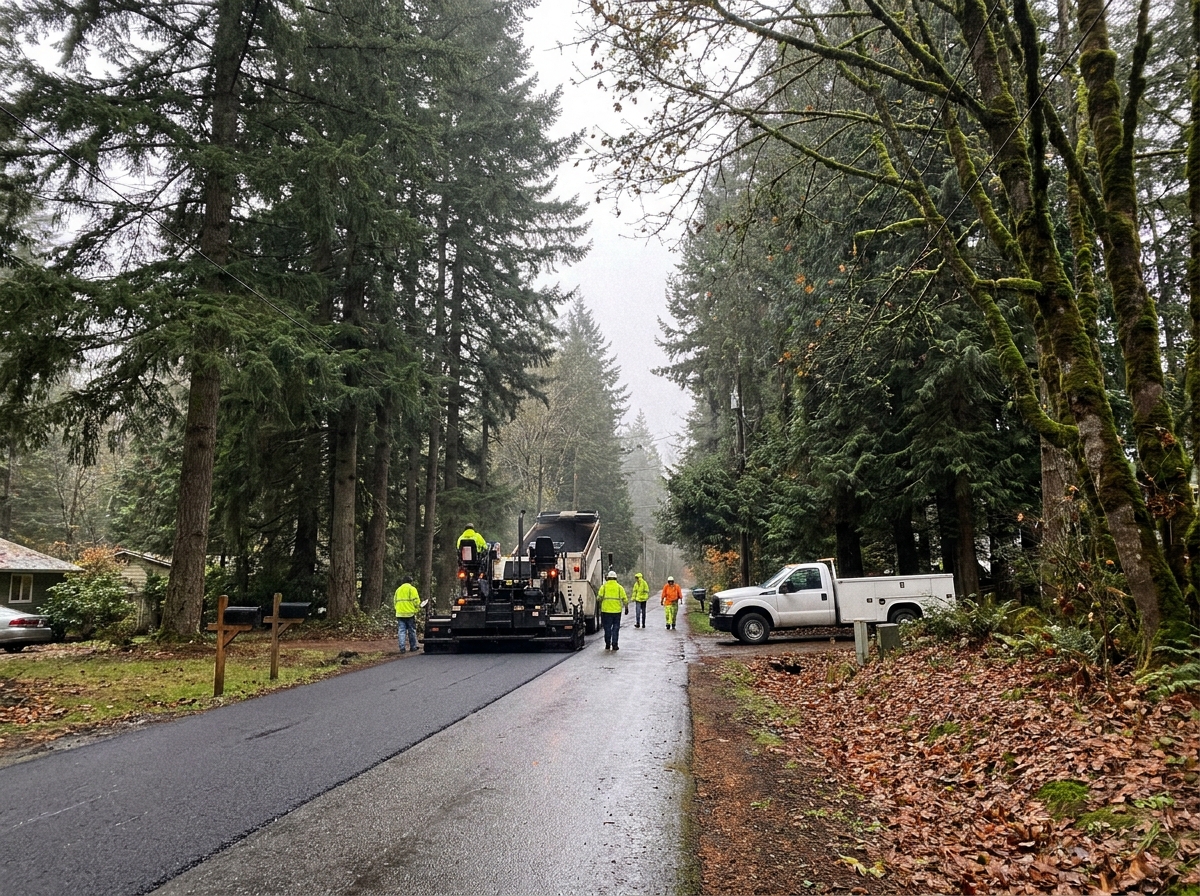
Private roads are association assets and they are paved on association budgets, which makes them a different kind of project. We provide a written scope and price a board can take to a vote, phase the work so residents keep vehicle access throughout, and tell you honestly whether a full rebuild or targeted repair plus overlay is the better use of the reserve fund.
Where the existing base is still sound but the surface has worn out, an overlay puts a new asphalt layer over the old one at a fraction of the cost of a rebuild. The catch is that an overlay only works over a sound base, and laying one over a failing foundation buys a season or two before the same cracks come through. We check what is underneath before recommending it.
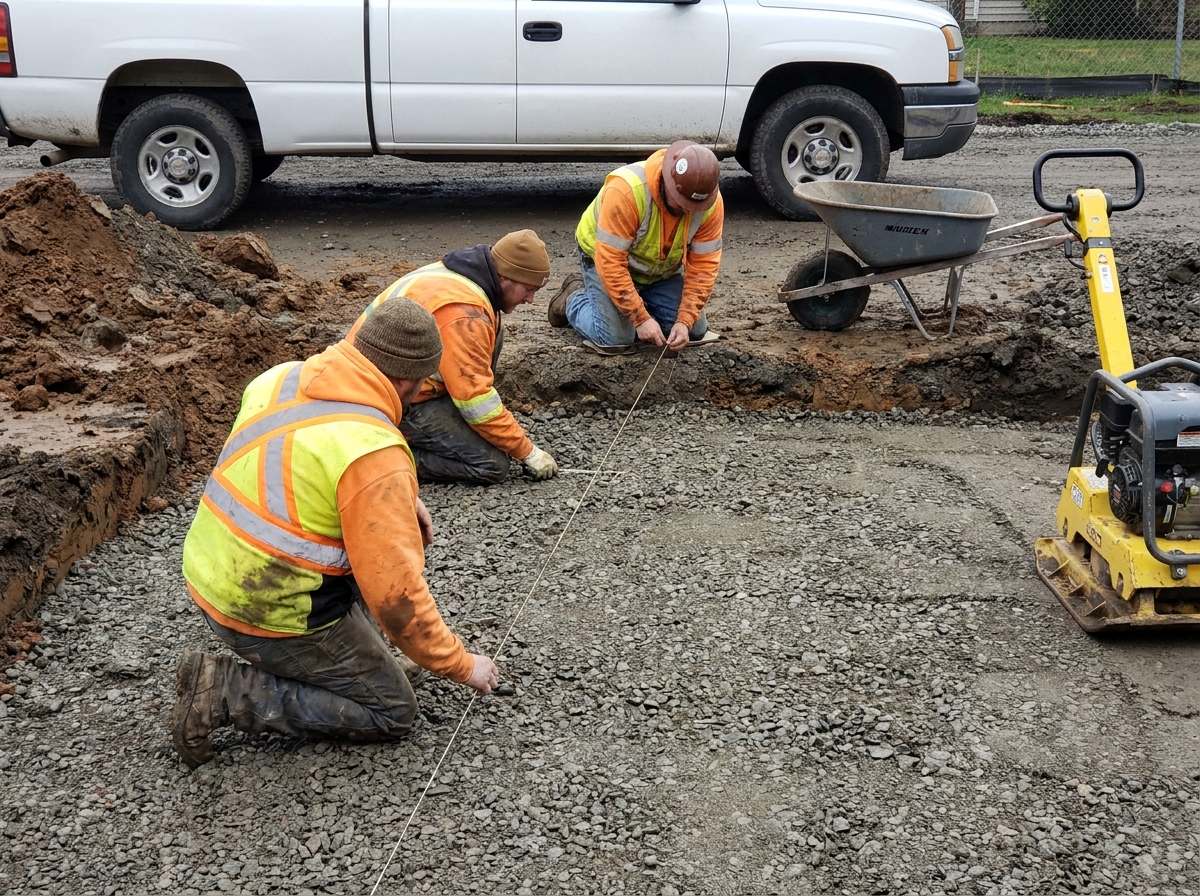
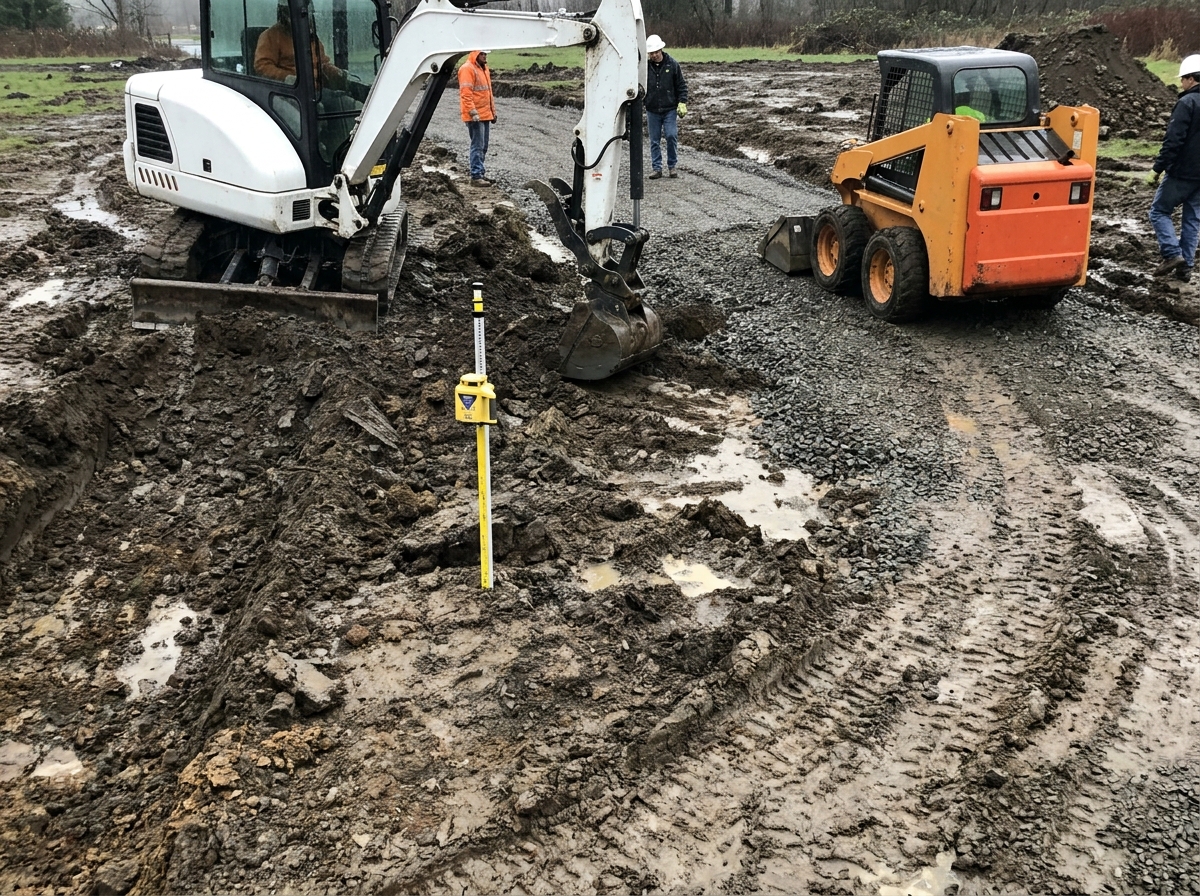
The part of the job you never see and the part that decides everything. Excavation to the right depth, removal of unsuitable material, aggregate base placed and compacted in lifts, and grading set so water leaves the surface. We also take on base construction as standalone work for sites that need the foundation fixed before anyone paves them.
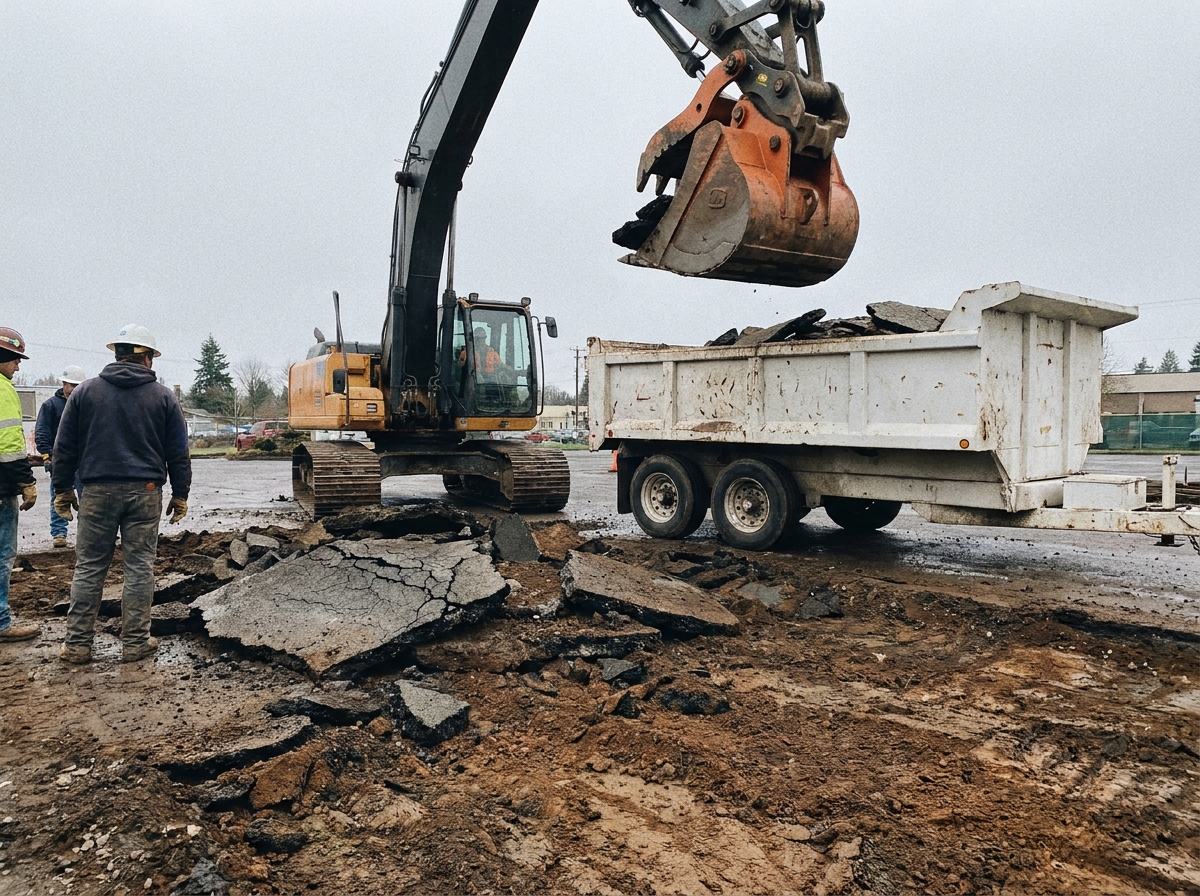
When a driveway or lot has failed structurally, with alligator cracking across the field, edges that have dropped, or potholes that come straight back after patching, the honest answer is that it needs rebuilding rather than repairing. We remove the failed surface and base, correct the subgrade and drainage, and build the whole section back properly.
We believe in making your asphalt project as simple and transparent as possible.
1
Initial Consultation & Assessment
We discuss your needs and goals. Ricardo will personally visit your property to assess the existing surface, identify underlying issues, and take precise measurements.
2
Clear Proposal & Honest Pricing
You'll receive a detailed, easy-to-understand proposal clearly outlining the scope of work, materials to be used, and straightforward pricing with no hidden fees.
3
Site Preparation & Scheduling
Once approved, we schedule work at your convenience. Our team arrives fully equipped to prepare the site, including cleaning, saw cuts, or grading for proper drainage.
4
Professional Installation or Repair
Our crew lays and compacts the asphalt at temperature, using the right equipment for the size of the job.
5
Final Walk-Through & Cleanup
We conduct thorough cleanup, then perform a final walk-through with you to ensure complete satisfaction and answer any questions about care and maintenance.
Cisco and his guy did a great job patching in asphalt for us. He is attentive and hardworking, and the results speak for themselves. We will have them back out once the weather warms back up to seal coat all the asphalt for a much smoother and cleaner look. Can’t wait. If you have any kind of paving needs, do not hesitate to reach out to Cisco, you’ll be happy you did.
They were quick to show up and bid the job. Once the bid was accepted, they showed up quickly and got the job done. They took their time to do a good thorough prep and cleaned up everything at the end of the job. Very professional and courteous. Highly recommend.
Couldn’t be happier. They showed up on last minute notice and far exceeded our expectations with their attention to detail and level of care for our homes driveway. Before, the driveway was a mess, but after Smooth Rollin’ Sealcoating and Paving was done our driveway was more functional and looked incredible. I’ll definitely use for more projects down the road.
Cisco and team did incredible job on my 20 year old driveway. They spent almost 2 days in prep and asphalt repair sealing all the cracks. Final cost looks amazing but really need it to heal up before turning wheels on it. Hard workers in the heat of the day. Highly recommend them!
Cisco and his crew did a great job on the asphalt patching that I requested. He responded to my Angie’s request almost immediately and was at our home that afternoon to take a look at the work to be done. His bid was lower than that of other contractors that I contacted. Cisco was responsive to text messages and phone calls. I had him do some extensive seal coated after seeing the quality of his work. I’ve worked with many contractors in my nearly fifty years as a homeowner, Cisco is in my top three list. Friendly and easy to work with.
Outstanding company. From start to finish Cisco communicated well and did an amazing job . He used plenty of product and worked fast and cleaned up afterwards. I cannot give Smooth Rolling enough stars ⭐️ ⭐️⭐️⭐️⭐️⭐️⭐️⭐️⭐️⭐️⭐️⭐️⭐️⭐️.
I highly recommend them for any paving project .
FAQ
Common Questions About Asphalt Paving
How much does a new asphalt driveway cost in Portland?
Square footage, excavation and base requirements, drainage, and site access are the four drivers, and they matter in roughly that order. A flat suburban driveway on sound ground with easy truck access is the straightforward case. A sloped lot, soft or wet ground, a long rural run, or restricted access all push the number up, because most of that additional cost sits under the asphalt where it is not visible in the finished job. We price after walking the site, because a figure quoted over the phone on this kind of work is a guess.
How thick should a residential asphalt driveway be?
For a typical Portland-area residential driveway carrying cars and light trucks, two to three inches of compacted asphalt over a properly compacted aggregate base is the usual specification. The base matters at least as much as the surface. Adding asphalt thickness over an inadequate base is one of the most common false economies in this trade, because the surface fails at the base regardless of how much material sits on top of it.
Can you pave over an existing asphalt driveway?
Sometimes, and it is genuinely cheaper when the conditions are right. An overlay works when the existing base is still structurally sound and the problems are confined to the surface. It does not work over a failed base, because the cracks in the old surface reflect straight through the new layer within a couple of seasons. We check what is underneath before recommending it, and we will tell you when an overlay is a waste of your money.
How long does new asphalt paving last in Portland?
A properly installed asphalt surface generally runs 15 to 20 years here. The spread between those two numbers is almost entirely base preparation and maintenance. Sealcoating every two to three years and sealing cracks as soon as they appear is what moves a driveway toward the top of that range rather than the bottom, because both keep water out of the base.
What time of year can asphalt be paved in Oregon?
Realistically, roughly April through October, with the shoulder months depending on the weather in a given year. Asphalt has to be laid and compacted while it is hot enough to move, and cold ground or steady rain takes that window away. We would rather tell you a job needs to wait for the season than lay a mat that cannot be compacted properly, because that surface will not last regardless of what it looks like on the day.
Do I need a permit to pave my driveway?
It depends on the jurisdiction and on what the work involves. Straightforward replacement of an existing residential driveway on private property frequently does not need one. Work in the public right of way, a new approach onto a street, and anything that changes drainage usually does. The property owner is responsible for permits, but we will tell you what your particular job is likely to need before you go looking.