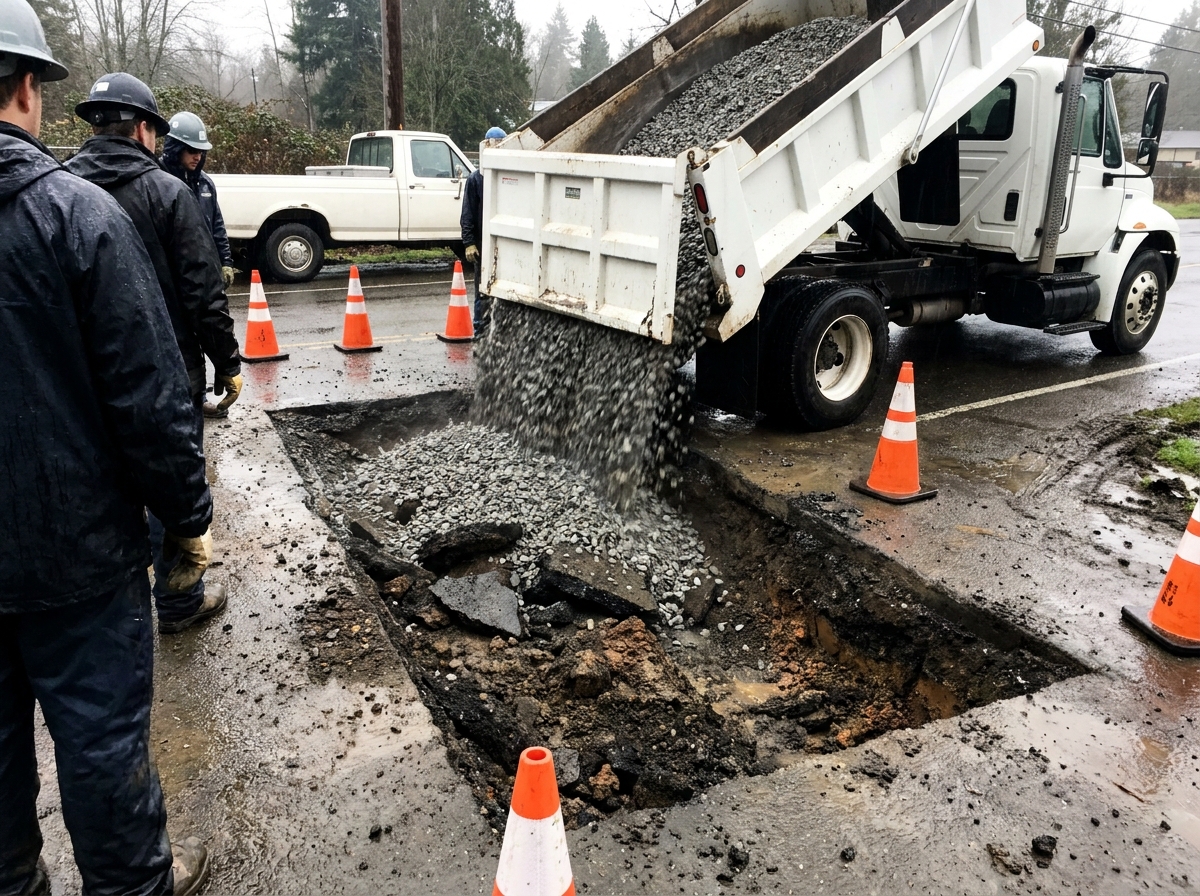
Smooth Rollin’ Sealcoating and Paving works throughout Wilsonville, which sits astride I-5 on the Clackamas and Washington county line. Wilsonville is unusual for a city its size in that the commercial paving demand outweighs the residential. The distribution and technology corridor along the interstate, Siemens, Coca-Cola, Collins Aerospace, Sysco, means loading docks, trailer aprons and truck courts, and those surfaces take punishment no residential driveway ever sees.
The residential side has its own character. Charbonneau sits south of the Willamette across the Boone Bridge and runs largely on private roads, as does Villebois on the west side, and private roads mean the association pays for paving rather than the city. Those are projects with a board, a budget cycle and a bid process, and we are comfortable working that way. Old Town on the north side is the older housing stock, where original driveways are now well past the point where sealcoating helps and replacement is the honest recommendation.
We deliver exceptional results backed by transparent pricing and a commitment to quality.
Truck-Rated Sections, Not Car-Rated
A trailer apron and a customer parking stall need different builds. Loaded trucks concentrate enormous point loads on a small footprint, and a lot built to car specification ruts within a season. We spec base and asphalt depth for the heaviest thing that will use the surface.
We Work With HOAs and Property Managers
Private roads in Charbonneau and Villebois are association assets. We provide the written scope and pricing a board needs to approve a project, phase the work so residents keep access, and stick to the schedule we agreed.
One Crew From Grading to Final Stripe
Excavation, grading, base, paving and striping all run through one team. No subcontractor handoffs. Everything we install in Wilsonville carries a 1-year warranty on our workmanship.
Phased So You Stay Open
We schedule commercial work around your operating hours where the job allows and phase larger lots so you never lose all your parking or all your dock access at once.
Our Promise
Quality You Can
Count On
Every job in Wilsonville gets the same crew and the same walk-through, and every surface gets specified for the heaviest thing that will drive on it.
Our Services
Complete Asphalt Services in Wilsonville
We offer a full range of asphalt paving and maintenance services to keep your property safe and looking its best.
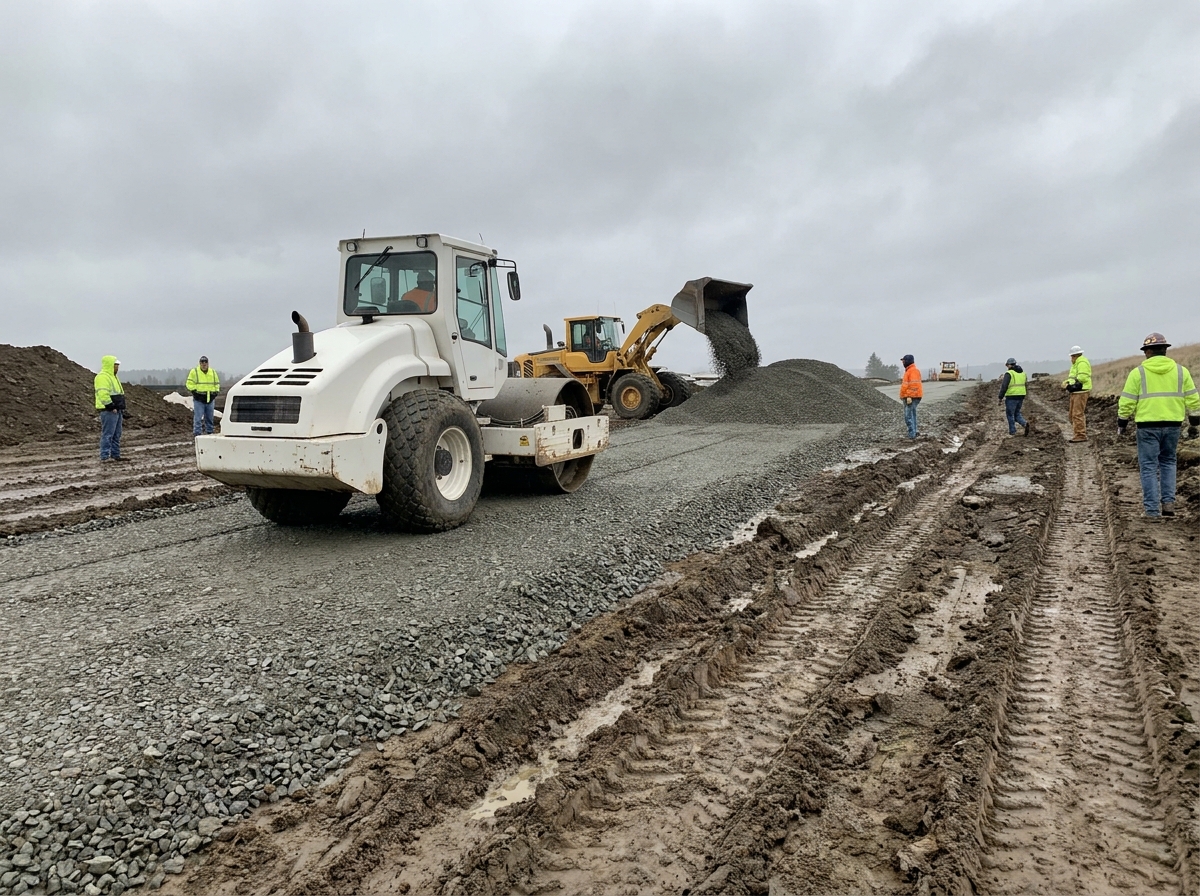
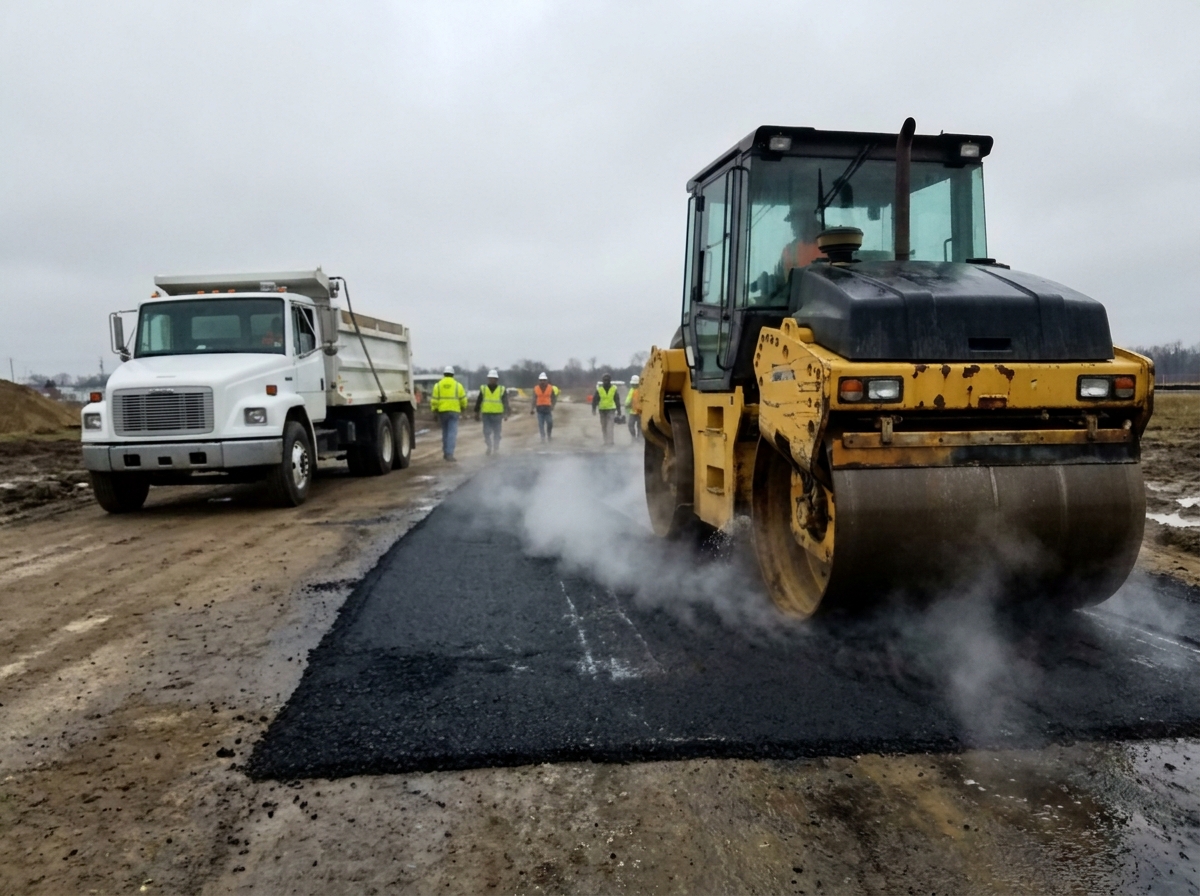
New paving specified for the vehicles that will actually use it. In Wilsonville that frequently means loaded trucks rather than cars, and the difference is not a detail. A surface built to residential specification will rut and shove under commercial axle loads inside a single season. We assess the traffic first, then build base depth and asphalt thickness to carry it, grade for drainage, and compact properly. That covers new driveways, commercial parking, yard and approach surfaces, and full-depth rebuilds where an existing surface has already failed under load.
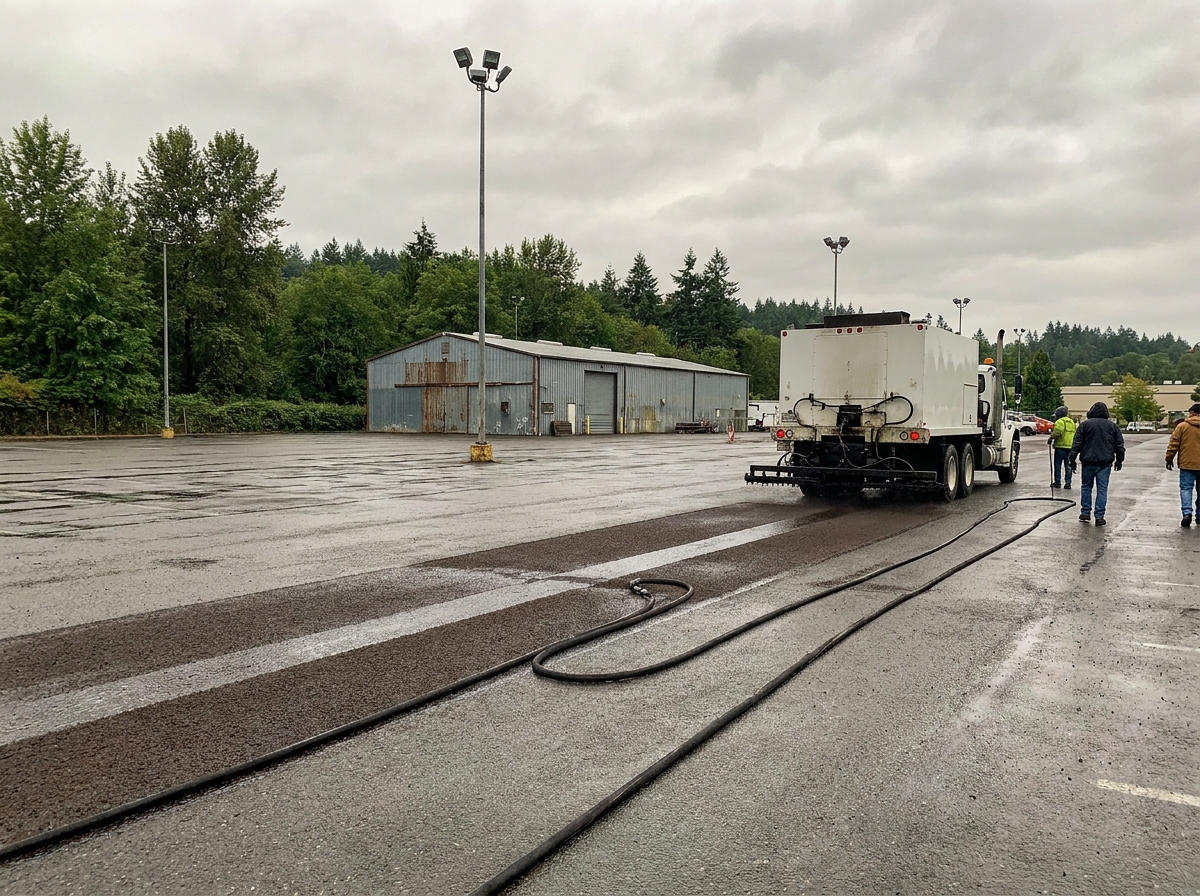
Sealcoating protects a sound surface from UV, rain and the oil and fuel that come with vehicle traffic, and on a working Wilsonville property those fluid spills matter as much as the weather. Crack sealing is the higher-value work: sealing a crack while it is narrow costs a fraction of repairing the pothole it becomes, and on a surface carrying heavy loads that pothole spreads far faster. We will tell you when a surface is worth maintaining and when the traffic has already taken it past the point where sealer helps.
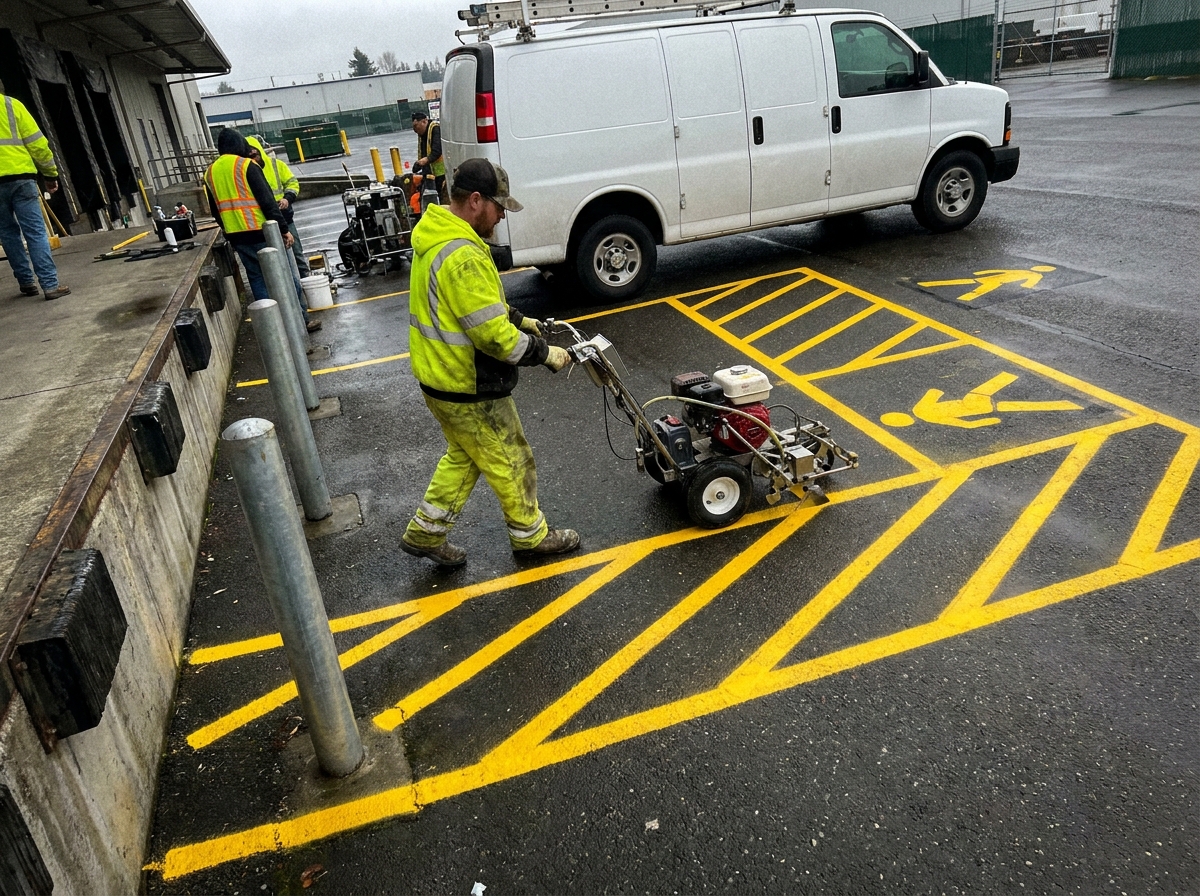
Layout and striping for Wilsonville commercial and industrial sites: ADA stalls and access aisles to current requirements, fire lanes, truck routes, dock and staging markings, numbered stalls and custom stencils. On a site with truck movement the layout matters as much as the compliance, because badly placed stalls create turning conflicts that chew up the pavement. We also install speed bumps, wheel stops, signs and posts.
On a surface carrying loaded vehicles, small failures spread quickly, because every axle that crosses a soft spot makes it bigger. We handle crack sealing, patching, saw-cut and full-depth repairs, base repair and drainage correction across Wilsonville. On truck-traffic surfaces we rebuild the base rather than patching the top, because a surface repair over a failed base under commercial load lasts weeks rather than years.
Cisco and his guy did a great job patching in asphalt for us. He is attentive and hardworking, and the results speak for themselves. We will have them back out once the weather warms back up to seal coat all the asphalt for a much smoother and cleaner look. Can’t wait. If you have any kind of paving needs, do not hesitate to reach out to Cisco, you’ll be happy you did.
They were quick to show up and bid the job. Once the bid was accepted, they showed up quickly and got the job done. They took their time to do a good thorough prep and cleaned up everything at the end of the job. Very professional and courteous. Highly recommend.
Couldn’t be happier. They showed up on last minute notice and far exceeded our expectations with their attention to detail and level of care for our homes driveway. Before, the driveway was a mess, but after Smooth Rollin’ Sealcoating and Paving was done our driveway was more functional and looked incredible. I’ll definitely use for more projects down the road.
Cisco and team did incredible job on my 20 year old driveway. They spent almost 2 days in prep and asphalt repair sealing all the cracks. Final cost looks amazing but really need it to heal up before turning wheels on it. Hard workers in the heat of the day. Highly recommend them!
Cisco and his crew did a great job on the asphalt patching that I requested. He responded to my Angie’s request almost immediately and was at our home that afternoon to take a look at the work to be done. His bid was lower than that of other contractors that I contacted. Cisco was responsive to text messages and phone calls. I had him do some extensive seal coated after seeing the quality of his work. I’ve worked with many contractors in my nearly fifty years as a homeowner, Cisco is in my top three list. Friendly and easy to work with.
Outstanding company. From start to finish Cisco communicated well and did an amazing job . He used plenty of product and worked fast and cleaned up afterwards. I cannot give Smooth Rolling enough stars ⭐️ ⭐️⭐️⭐️⭐️⭐️⭐️⭐️⭐️⭐️⭐️⭐️⭐️⭐️.
I highly recommend them for any paving project .
FAQ
Frequently Asked Questions
Answers to common questions about paving and asphalt work in Wilsonville.
How long does a commercial parking lot project take in Wilsonville?
Most small commercial lots are a few days of work once we mobilize: preparation and base, then paving, then striping after the surface has cured enough to hold paint. Weather is the real variable, since asphalt needs a dry enough window to lay and compact properly. We build a buffer into commercial schedules and phase larger lots so you never lose all your parking at once.
Do you pave private roads for HOAs in Charbonneau or Villebois?
Yes. Private road work is a normal part of what we do and it runs differently from a single driveway. We provide a written scope and price the board can take to a vote, work within your budget cycle, and phase the paving so residents keep vehicle access throughout. Where a road has failed in sections rather than uniformly, we will tell you honestly whether a full rebuild or targeted repair plus overlay is the better use of the reserve.
What is the difference between sealcoating and asphalt paving?
Paving builds or rebuilds a surface. Sealcoating protects one that is still sound, shielding it from UV, rain and the oil and fuel that come with vehicle traffic. The distinction is sharper on a working property than a residential one: under heavy loads a failing base shows itself quickly, and sealcoat applied over it is money spent on cosmetics. We check what is underneath before recommending either.
How often should asphalt be sealcoated in Wilsonville?
Every two to three years for most surfaces, and more often on areas that see fuel and hydraulic fluid, because those attack asphalt binder directly rather than just weathering it. Crack sealing should happen whenever a crack appears. On heavy-traffic surfaces sealcoat is genuinely secondary to keeping the base sound, so if we think your money is better spent on base repair than on sealer, we will say so.
How long before I can drive on a new asphalt driveway?
Cars can normally use it within 24 to 72 hours depending on temperature and thickness. Loaded trucks are a different question and need considerably longer, because full-weight traffic on asphalt that has not fully hardened will leave permanent depressions. We give you two separate timings on commercial jobs, one for light vehicles and one for heavy, and it is worth holding to the second one.