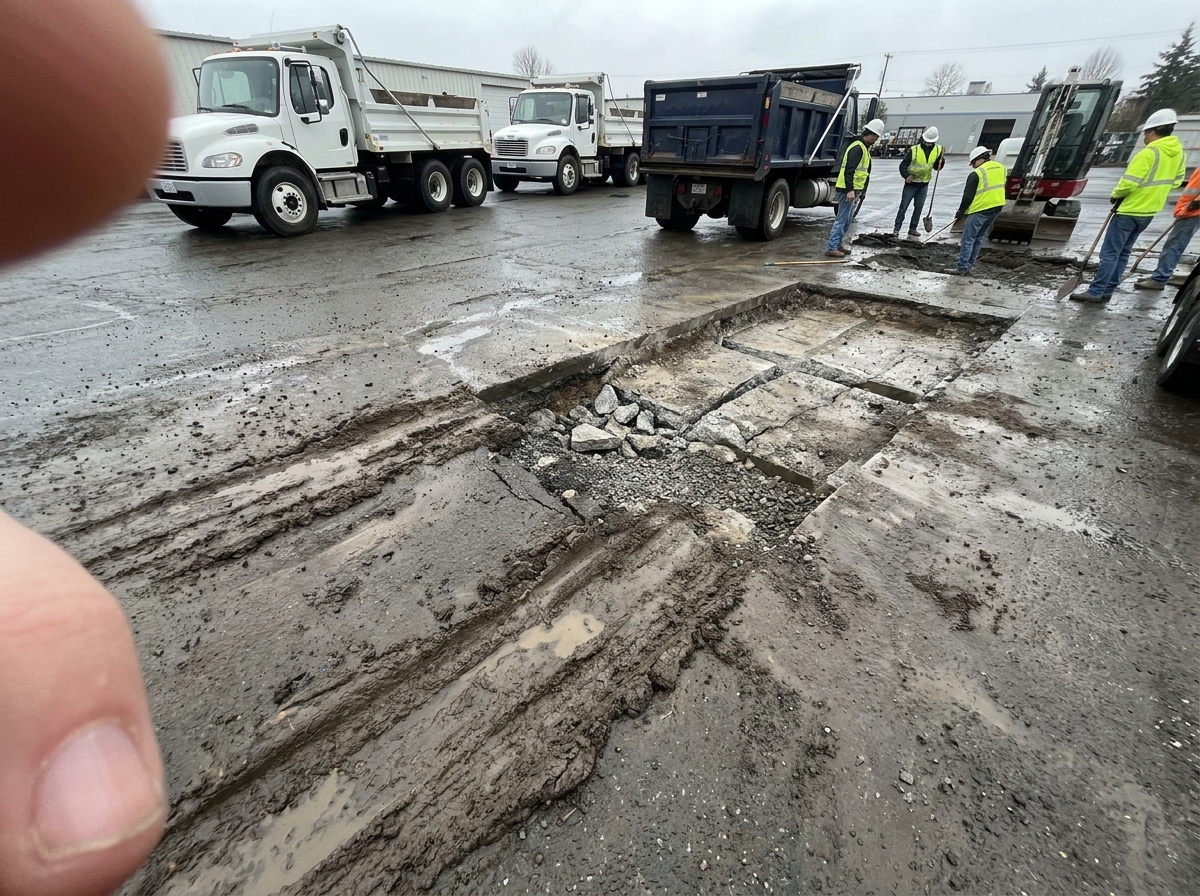
New driveways, parking lots and asphalt repair for Longview properties, built for port traffic, mature street trees and Columbia River weather.
Warranty
Satisfaction
Portland Team
Smooth Rollin’ Sealcoating and Paving serves Longview and the rest of Cowlitz County, running north up I-5 from our Gresham shop. Longview is a planned city, laid out by George Kessler between 1921 and 1924 around the Civic Circle, and that history shows up in the pavement. The grid is generous, the setbacks are deep, and the driveways are long. It also earned the city its nickname, and that is where the paving problem starts.
Longview is the City of Trees, and a century of them now sit alongside driveways that were poured or paved decades after the trees went in. Root heave is the single most common reason a Longview driveway fails early, and it is not fixed by resurfacing over the top. We cut out and rebuild the affected section, deal with the root where we are allowed to, and rebuild the base so the repair lasts. On the industrial side, the Port of Longview and the mills mean loaded trucks, and a lot at Weyerhaeuser weight needs a different section than a retail lot. We spec both.
Nearby we also serve Kelso, WA, Woodland, WA, Ridgefield, WA and Vancouver, WA. See every city we cover on our service areas page.
Warranty on All Work
We deliver exceptional results backed by transparent pricing and a commitment to quality.
Cracking and lifting along one edge of an otherwise sound driveway is almost always a root, not a base failure. Resurfacing over it buys a season. We cut the failed section out, rebuild the base properly, and tie the patch in so it does not read as a repair from the street.
A driveway and a lot that takes loaded trucks are not the same job. We spec base depth and asphalt thickness for what will actually drive on it. Underbuilding a commercial lot in a port and mill town is how you end up repaving in four years.
One team runs the job start to finish, from excavation and grading through paving and striping. No subcontractor gaps. Everything we install in Longview carries a 1-year warranty on our workmanship.
A written proposal with the scope and the price, base and drainage itemized. No allowances that balloon. If we open up the site and find something, you hear about it before we act on it.
Every job in Longview gets the same crew and the same walk-through, and every surface gets specified for the heaviest thing that will drive on it.
We offer a full range of asphalt paving and maintenance services to keep your property safe and looking its best.
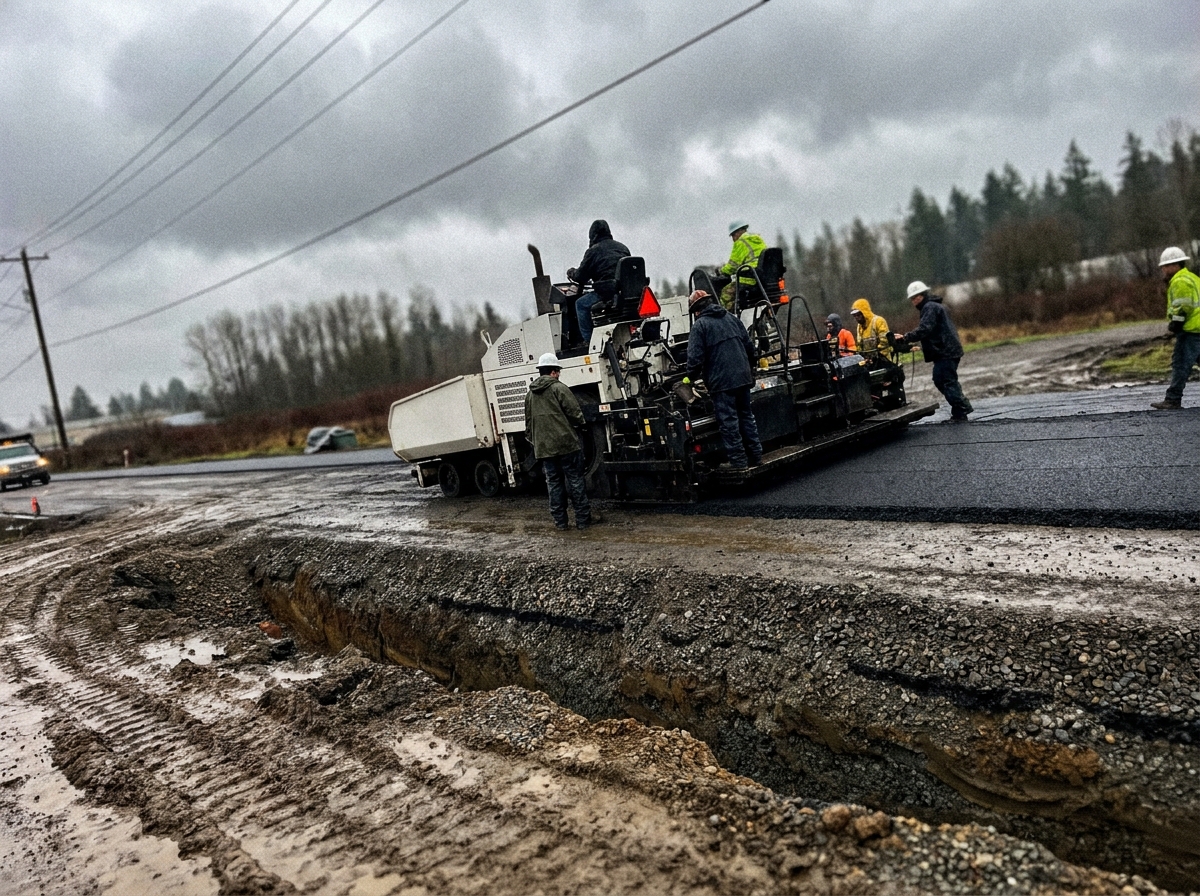
New paving specified for the vehicles that will actually use it. In Longview that frequently means loaded trucks rather than cars, and the difference is not a detail. A surface built to residential specification will rut and shove under commercial axle loads inside a single season. We assess the traffic first, then build base depth and asphalt thickness to carry it, grade for drainage, and compact properly. That covers new driveways, commercial parking, yard and approach surfaces, and full-depth rebuilds where an existing surface has already failed under load.
Sealcoating protects a sound surface from UV, rain and the oil and fuel that come with vehicle traffic, and on a working Longview property those fluid spills matter as much as the weather. Crack sealing is the higher-value work: sealing a crack while it is narrow costs a fraction of repairing the pothole it becomes, and on a surface carrying heavy loads that pothole spreads far faster. We will tell you when a surface is worth maintaining and when the traffic has already taken it past the point where sealer helps.
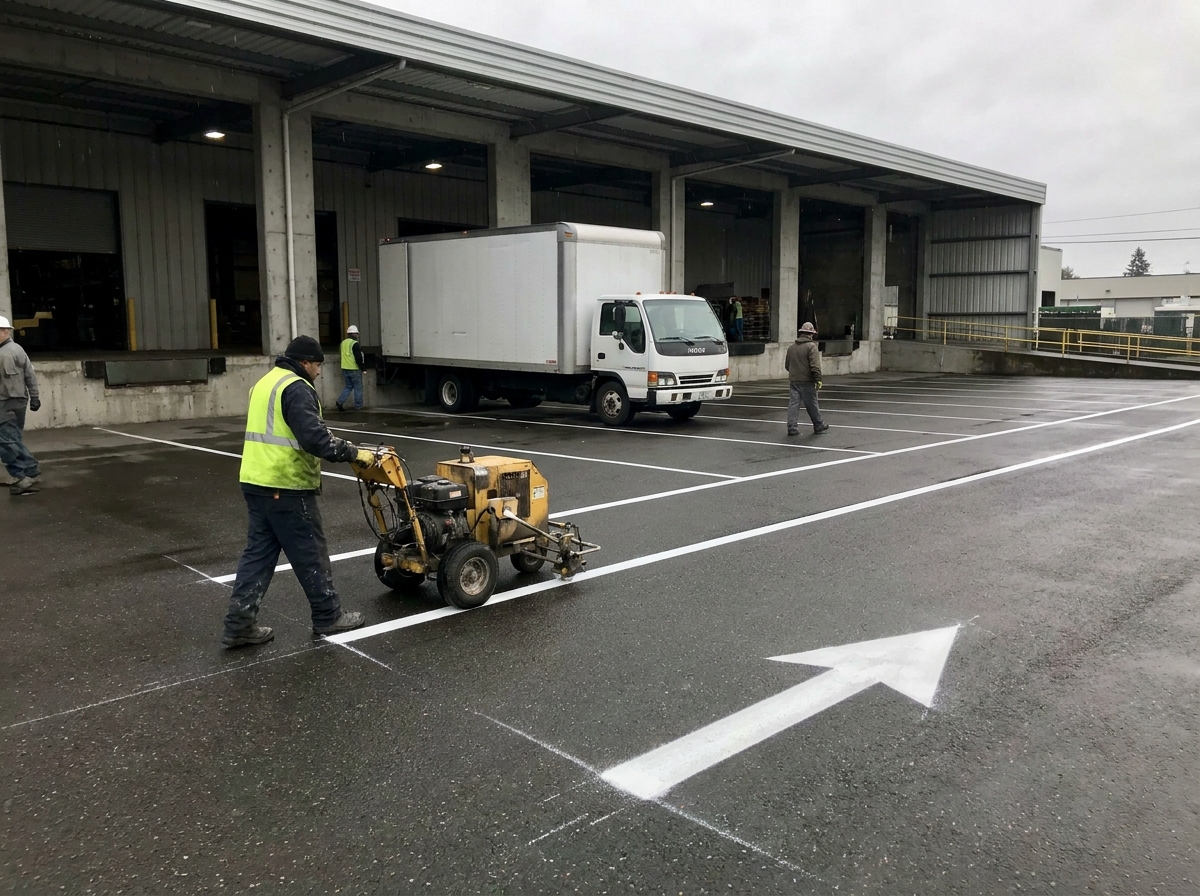
Layout and striping for Longview commercial and industrial sites: ADA stalls and access aisles to current requirements, fire lanes, truck routes, dock and staging markings, numbered stalls and custom stencils. On a site with truck movement the layout matters as much as the compliance, because badly placed stalls create turning conflicts that chew up the pavement. We also install speed bumps, wheel stops, signs and posts.
On a surface carrying loaded vehicles, small failures spread quickly, because every axle that crosses a soft spot makes it bigger. We handle crack sealing, patching, saw-cut and full-depth repairs, base repair and drainage correction across Longview. On truck-traffic surfaces we rebuild the base rather than patching the top, because a surface repair over a failed base under commercial load lasts weeks rather than years.
We make your asphalt project as simple and transparent as possible.
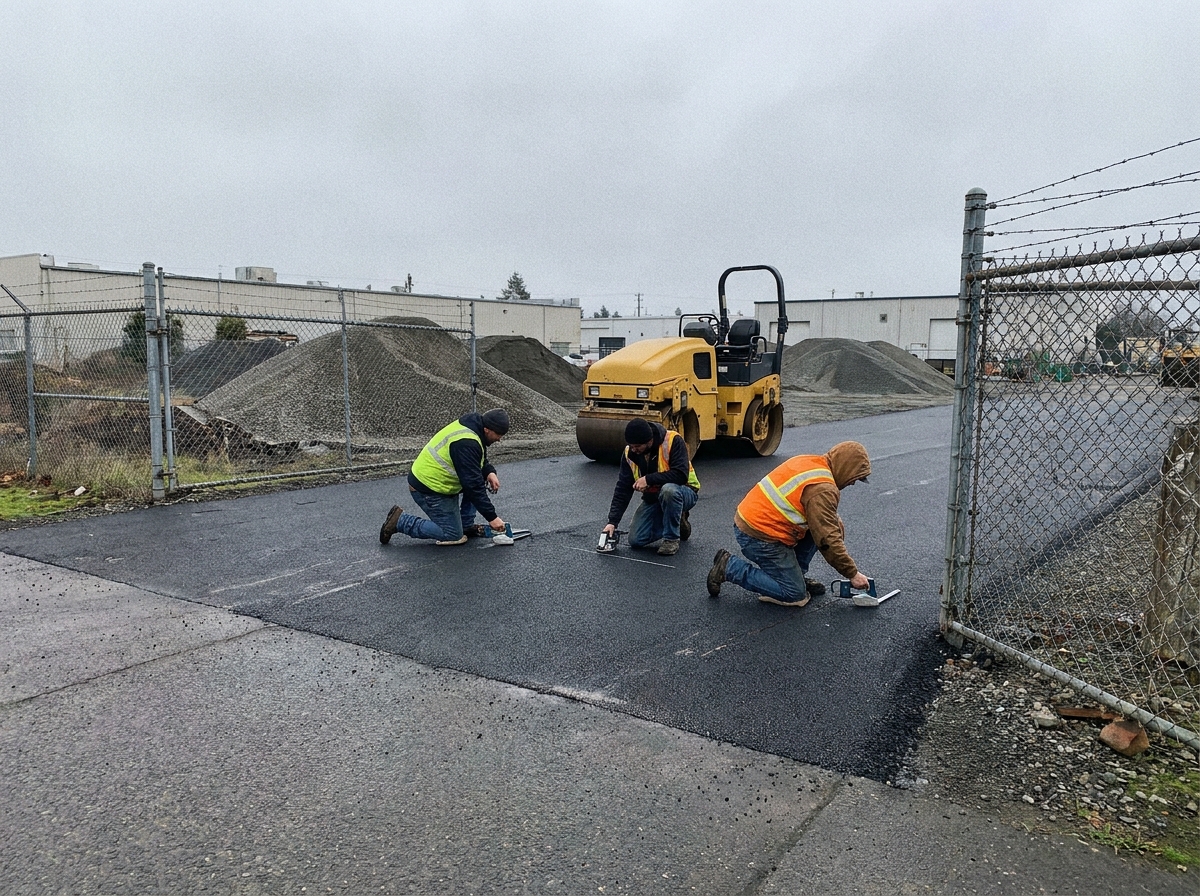
We discuss what you need and visit your Longview property to assess the existing surface, check the base and take measurements.
You receive a detailed, easy-to-understand proposal with straightforward pricing and no hidden fees.
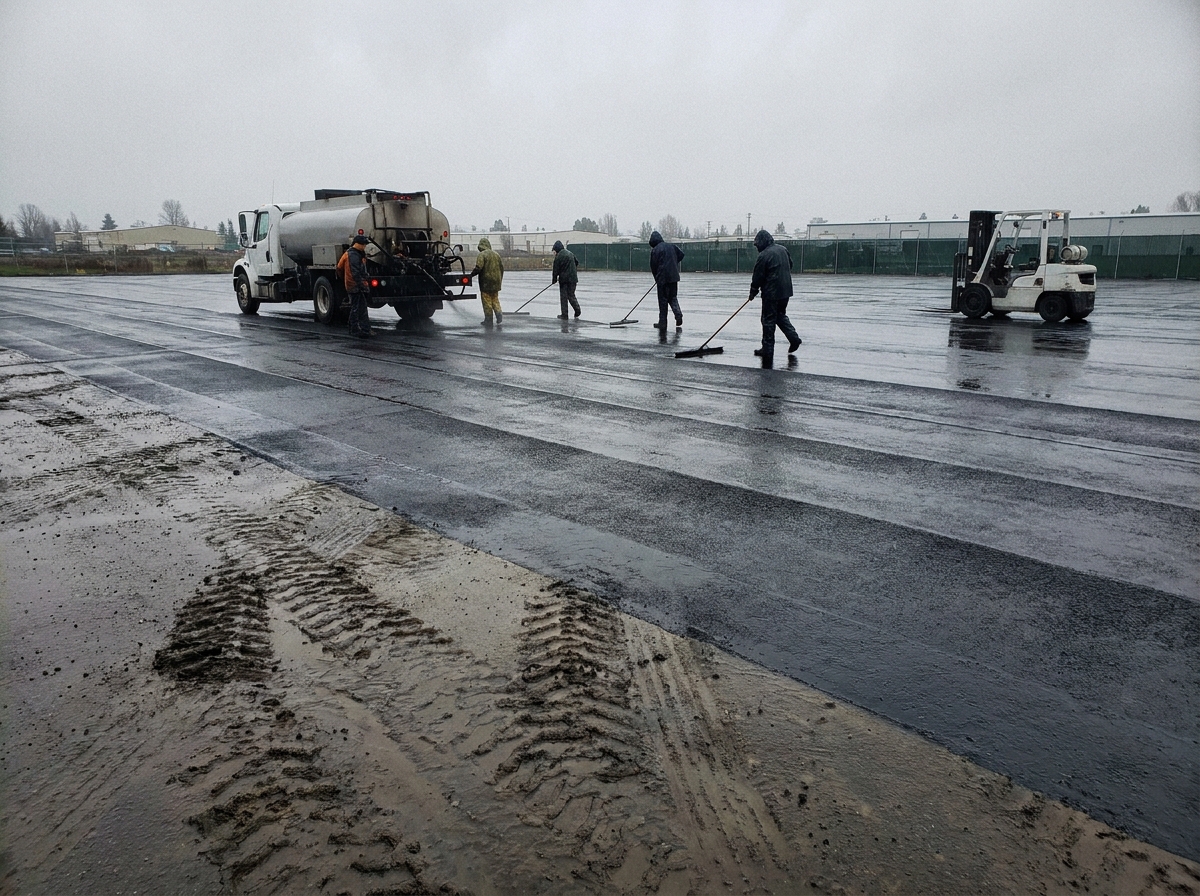
Our team arrives fully equipped to prepare the site, including cleaning, grading, and ensuring proper drainage.
Our crew lays and compacts the asphalt at temperature, using the right equipment for the size of the job.
We conduct thorough cleanup and perform a final walk-through to ensure your complete satisfaction.
Ready to begin?


Answers to common questions about paving and asphalt work in Longview.
Usually yes, and that is normally the right call. Lifting along one edge is almost always a tree root rather than a base failure, so the sound majority of the driveway does not need touching. We saw cut the failed section out, address the root where the city and the tree allow, rebuild the base, and pave the patch back in. Resurfacing over a root without removing the cause just moves the crack up into the new layer.
Yes, and they get a different specification than residential work. Loaded truck traffic from the port and the mills needs greater base depth and a thicker asphalt section than a retail or office lot. We phase larger jobs so you keep access and parking open while we work, and we handle the striping and ADA layout in the same visit rather than sending a second crew back later.
Paving builds or rebuilds a surface. Sealcoating protects one that is still sound, shielding it from UV, rain and the oil and fuel that come with vehicle traffic. The distinction is sharper on a working property than a residential one: under heavy loads a failing base shows itself quickly, and sealcoat applied over it is money spent on cosmetics. We check what is underneath before recommending either.
Every two to three years for most surfaces, and more often on areas that see fuel and hydraulic fluid, because those attack asphalt binder directly rather than just weathering it. Crack sealing should happen whenever a crack appears. On heavy-traffic surfaces sealcoat is genuinely secondary to keeping the base sound, so if we think your money is better spent on base repair than on sealer, we will say so.
Cars can normally use it within 24 to 72 hours depending on temperature and thickness. Loaded trucks are a different question and need considerably longer, because full-weight traffic on asphalt that has not fully hardened will leave permanent depressions. We give you two separate timings on commercial jobs, one for light vehicles and one for heavy, and it is worth holding to the second one.